s o c i a l c l u b
Mission Statement:
To bring together lovers of all things beer in an inclusive social environment, to pay homage to the history and tradition of California beer, and to embrace the D.I.Y. roots of homebrewing.
President & Founder: J. Michael Niotta
Vice President & Founder: Chris Calton
Treasurer & Founder: David Vazquez
Secretary: Robby Cheverton
Sgt at Arms: Vincent “Gonzo” Gonzalez
Captain: Jorge Herrera
Captain: Johnny “Bottles” Kunkel
Graphic Design: Chris Armes
501(c)7 nonprofit Social Club since 2023
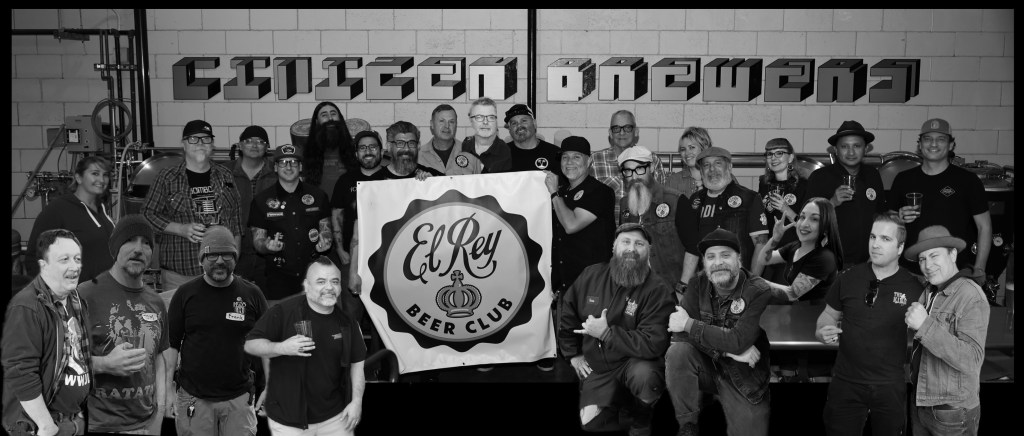
About the Club
El Rey Brewing Company opened in San Francisco during the final year of Prohibition. in October of 1933, after six months as a SoCal distributor, Los Angeles entrepreneur Big George Niotta headed north and bought the brewery. Eighty-five years later, Big George’s great grandson, author J. Michael Niotta, paid homage by founding the El Rey Beer Club in January 2019. His original intent was to learn the industry from his homebrewing pal Chris Calton and to one day revive his great grandpa’s brewery and its Bay Area staple, steam beer.
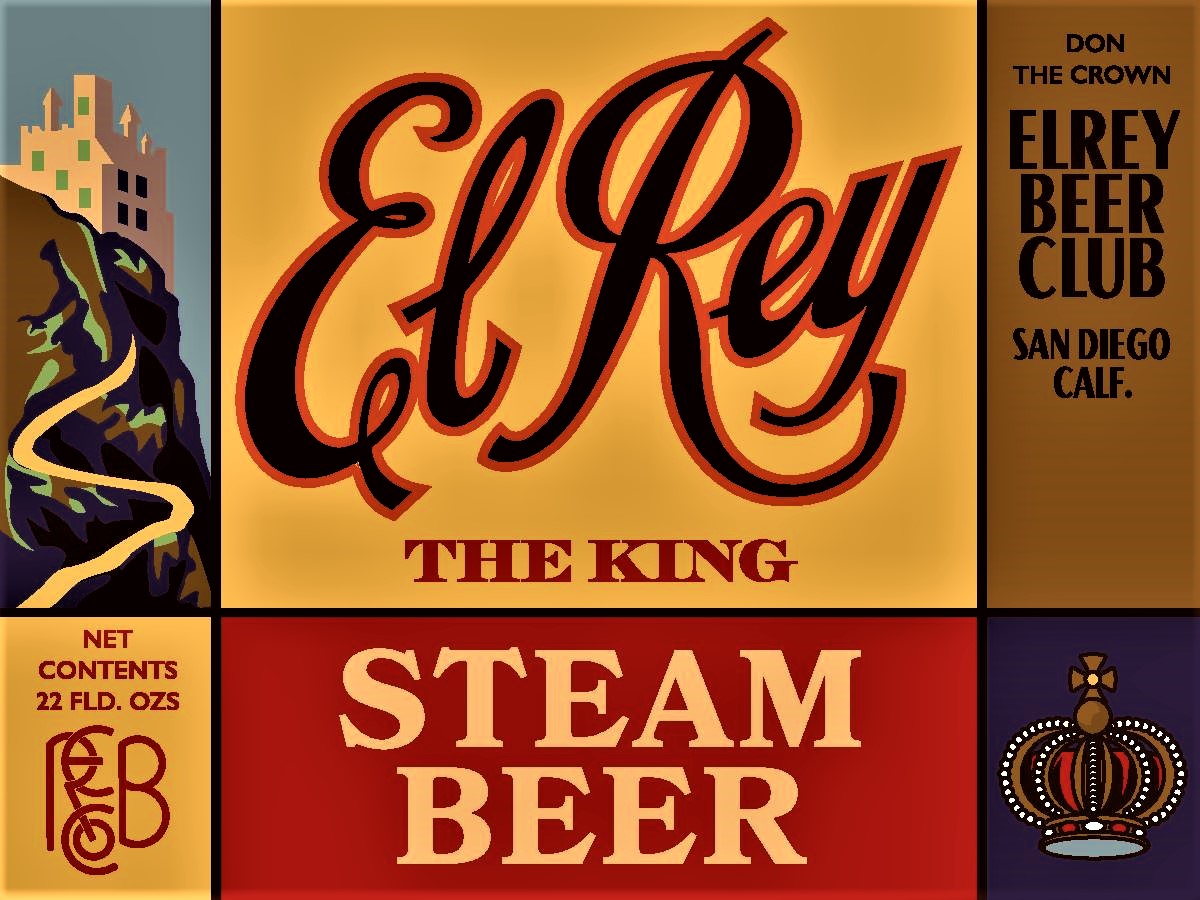
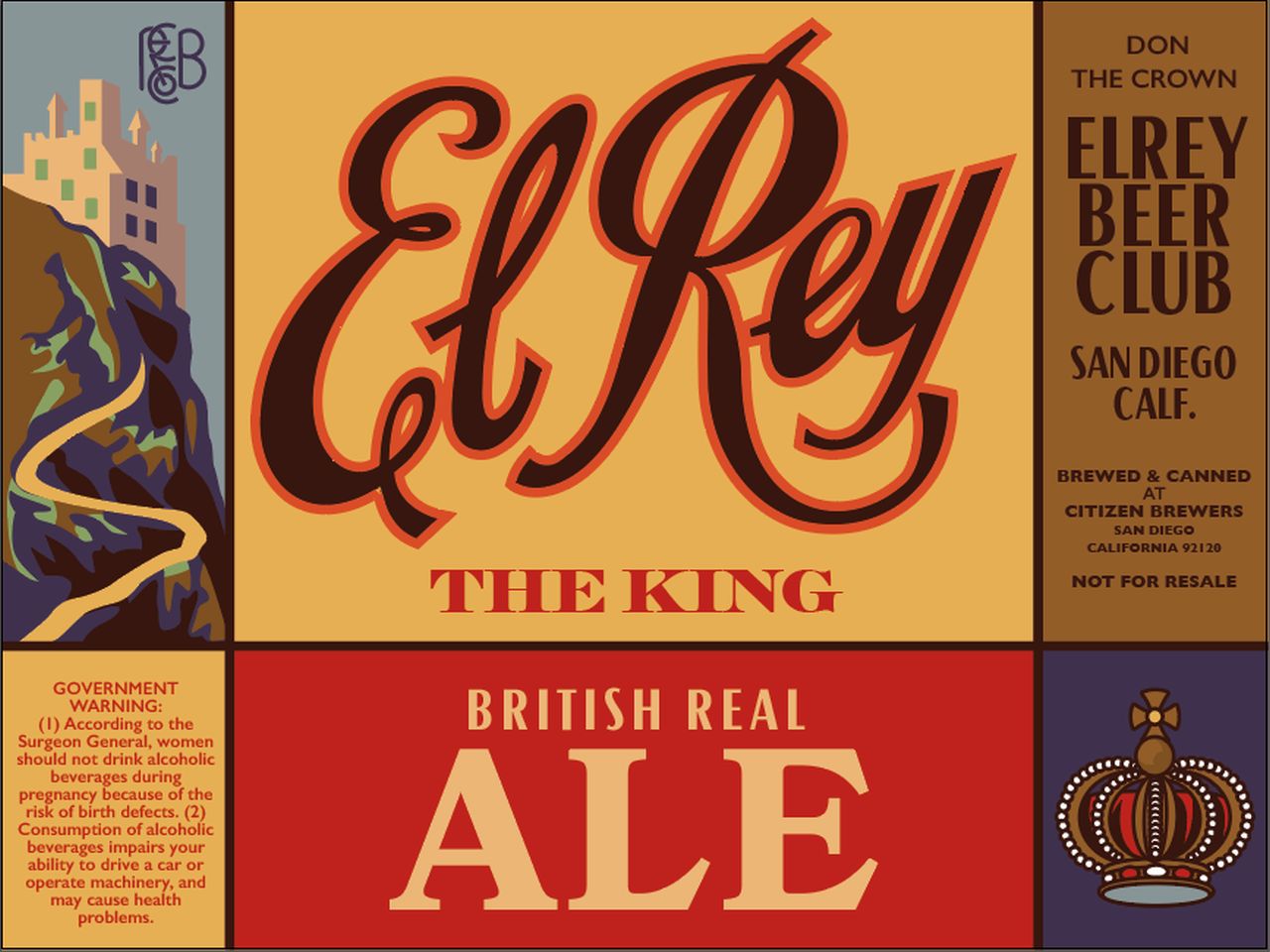
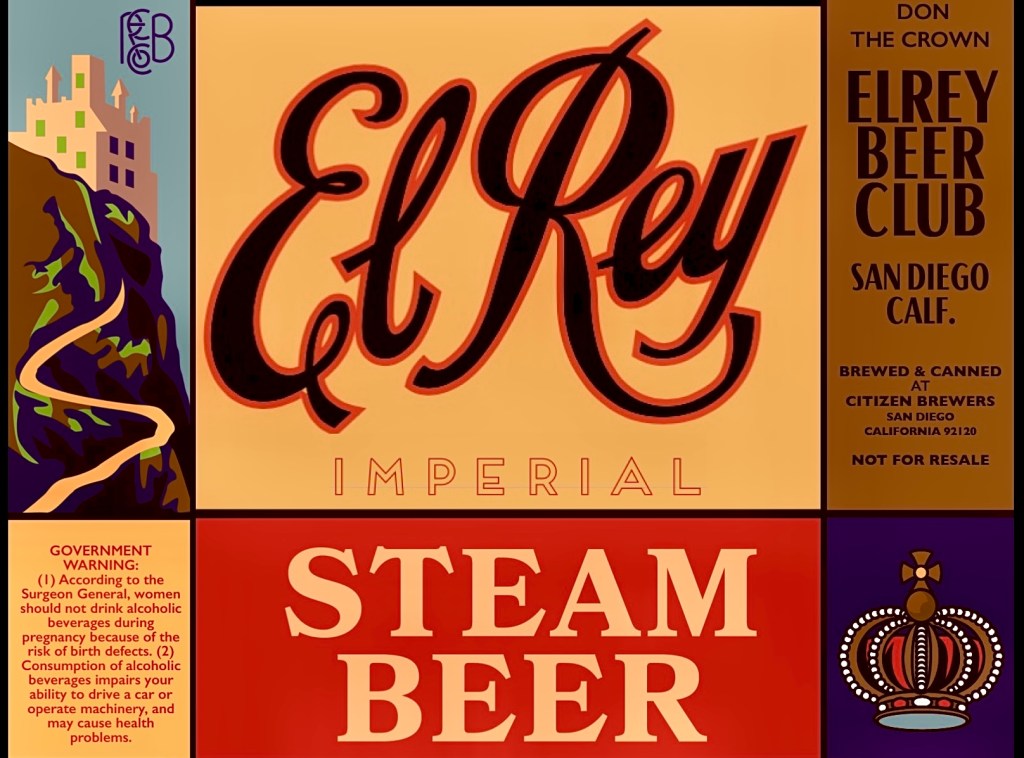
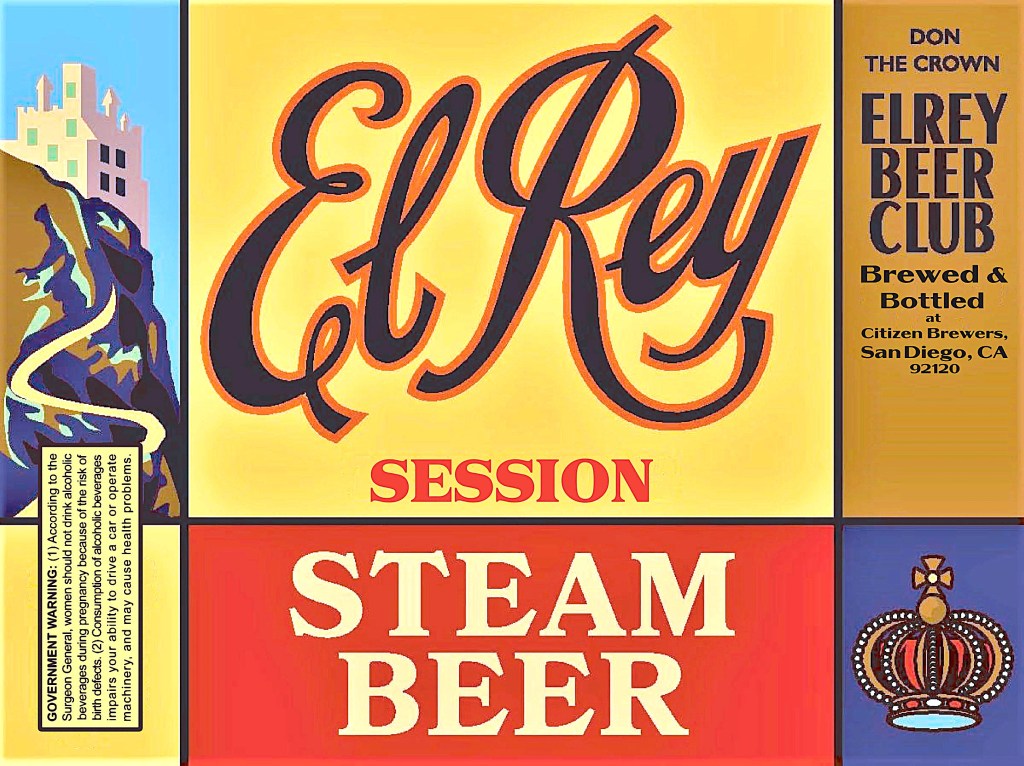
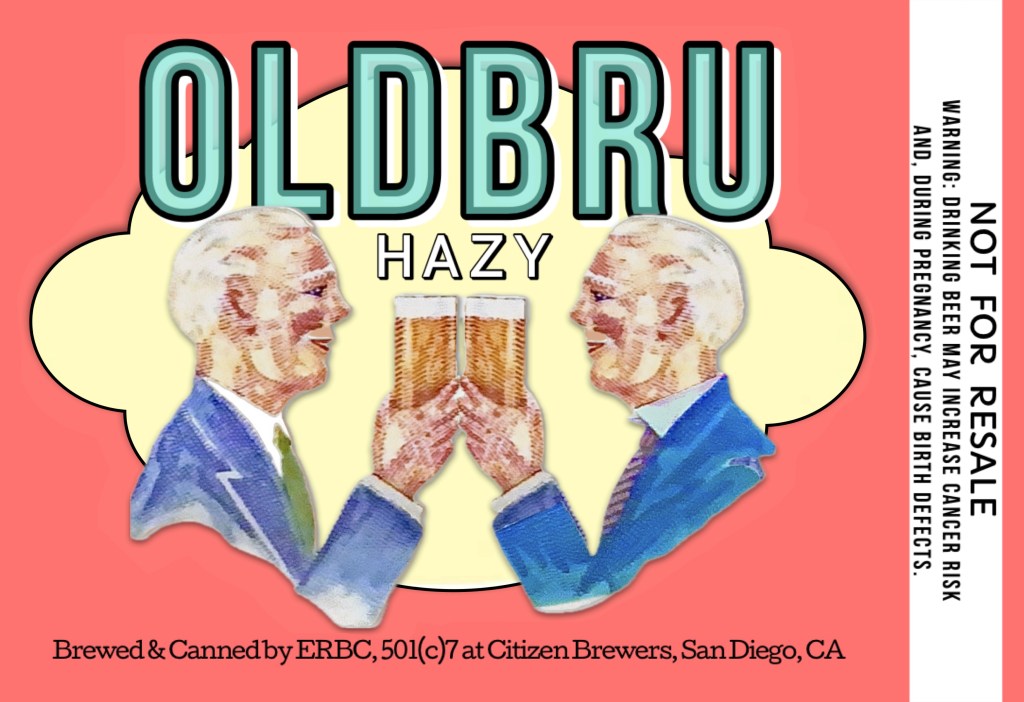
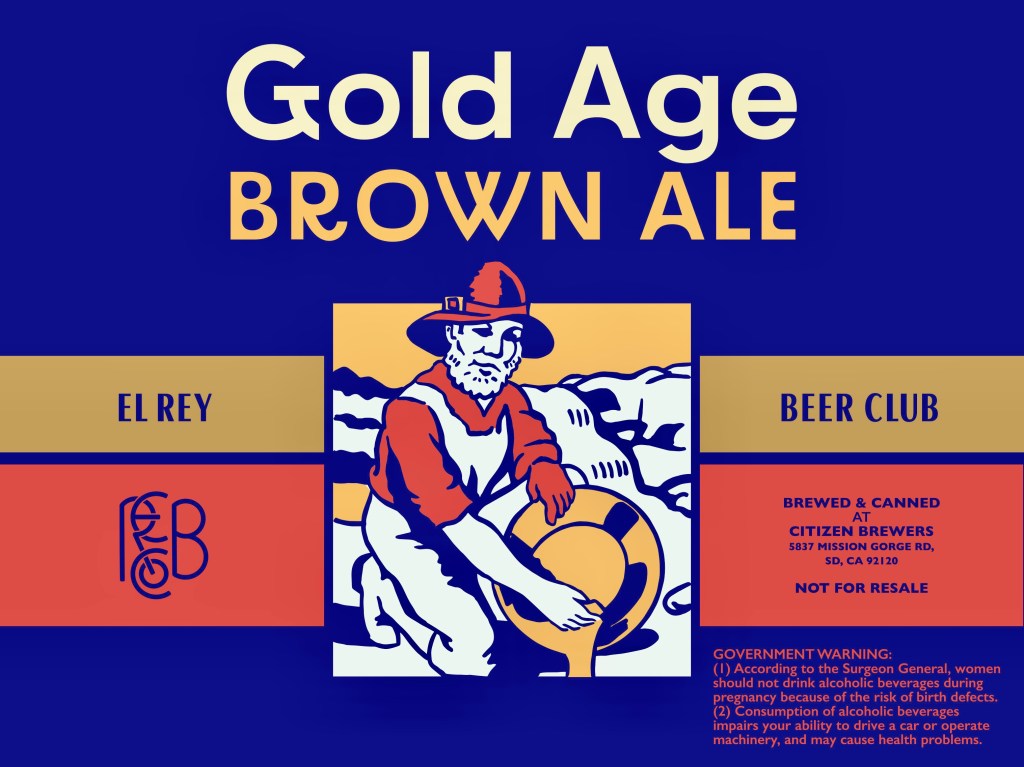
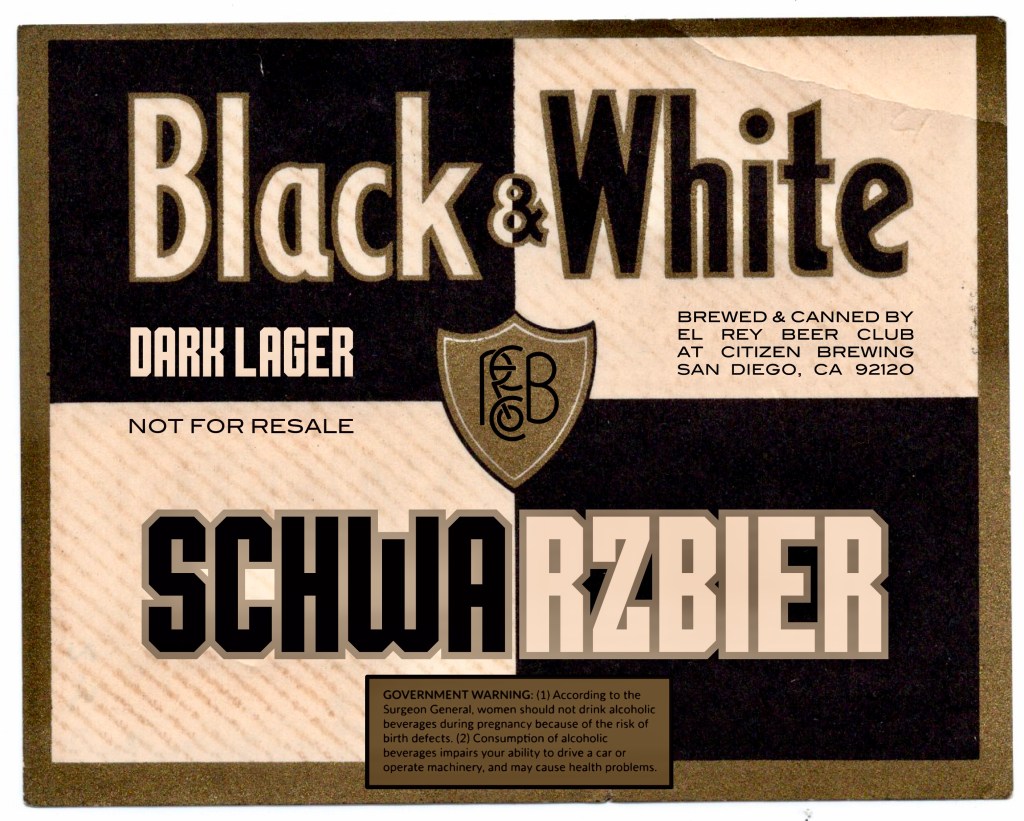
Although COVID and two active duty deployments got in the way, Niotta eventually revisited his dream. In August of 2021, he and Calton brought together a handful of close friends and relatives for their first official meeting. Among them was future treasurer David Vazquez. A couple months later they brewed their first batch of steam beer at Citizen Brewers in San Diego. The El Reys Now Brew, Bottle, Can, and Label on the premises year round–paying homage to Big George’s legacy by reviving the original label artwork and beer styles of the 1930s and early 40s.
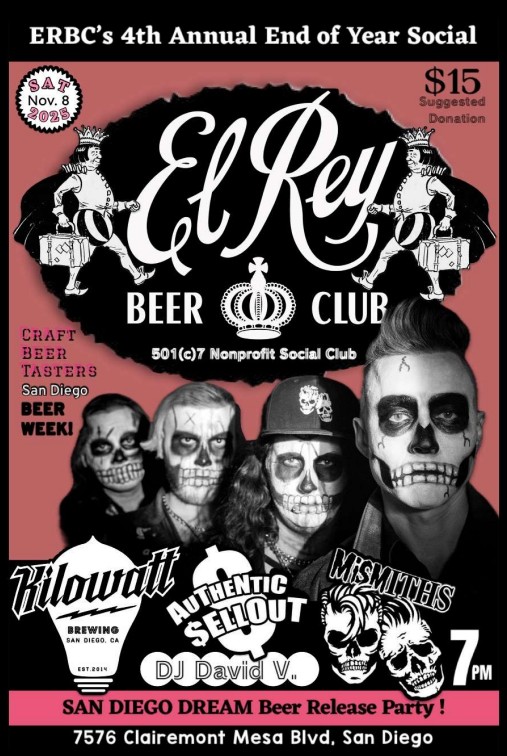
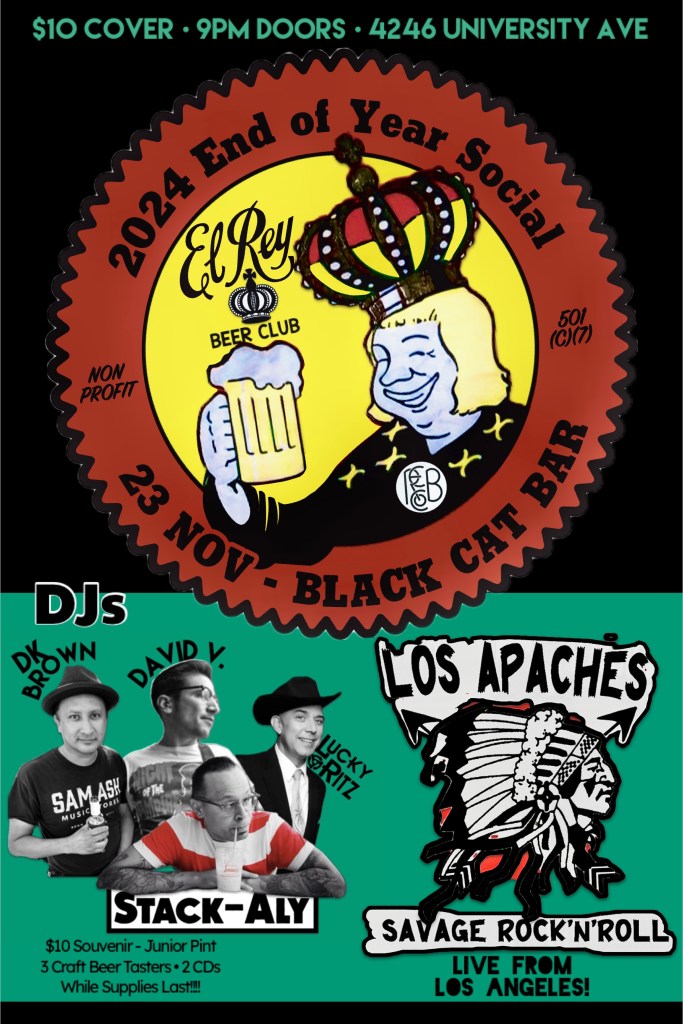
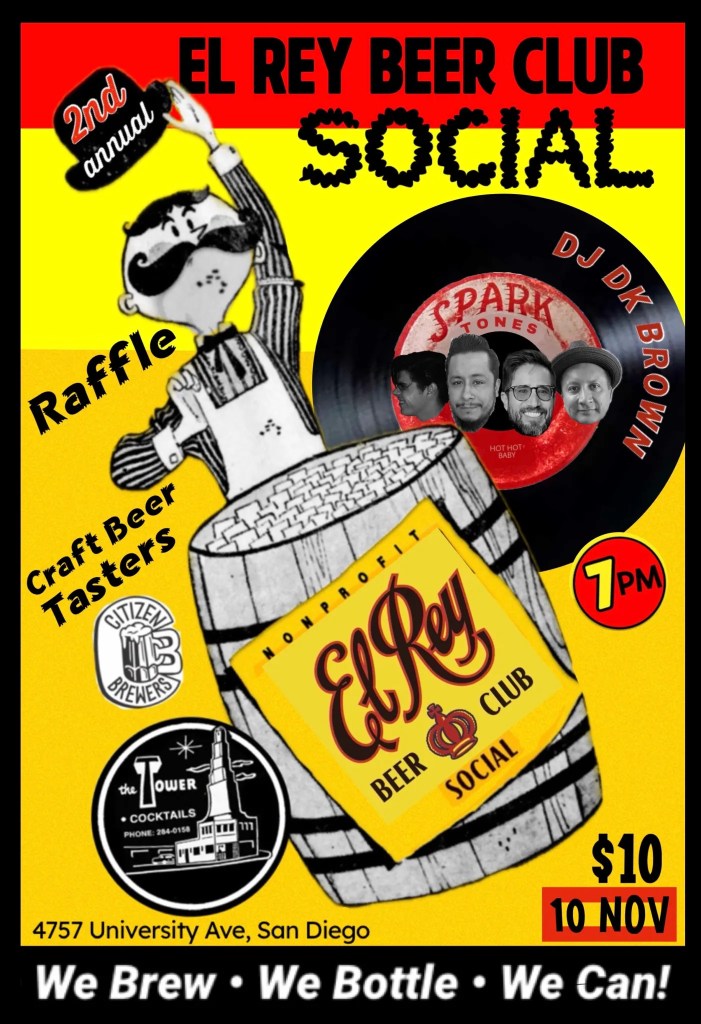
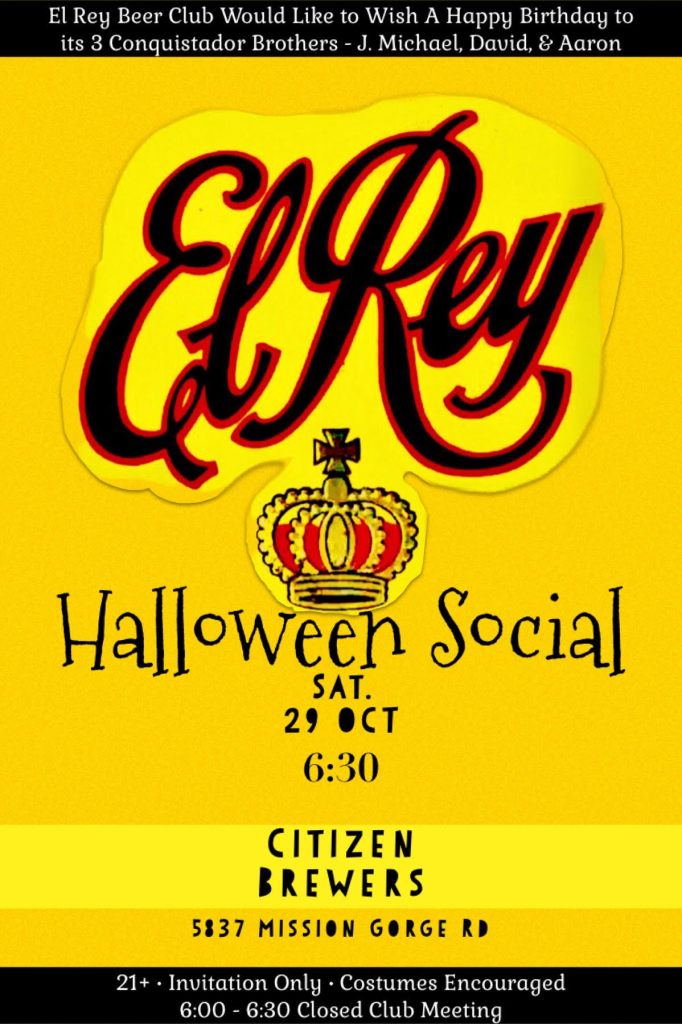
In May 2023, the Club incorporated as a nonprofit social club. The year prior marked another new development, the start of an annual end of year social to showcases the club’s beer to the public and to formally induct prospects in an initiation ceremony. Come out and celebrate with us!
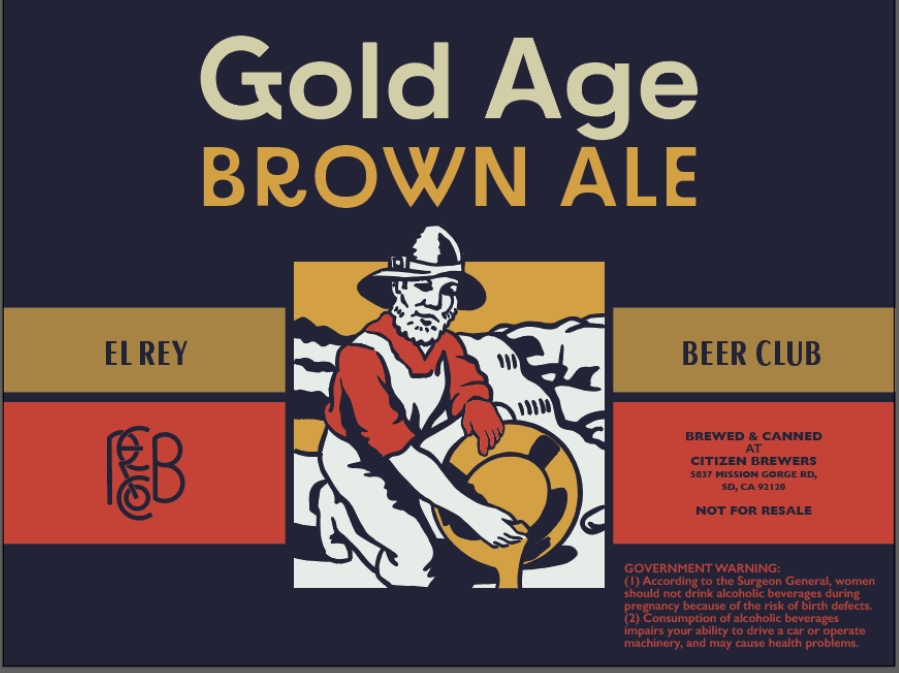
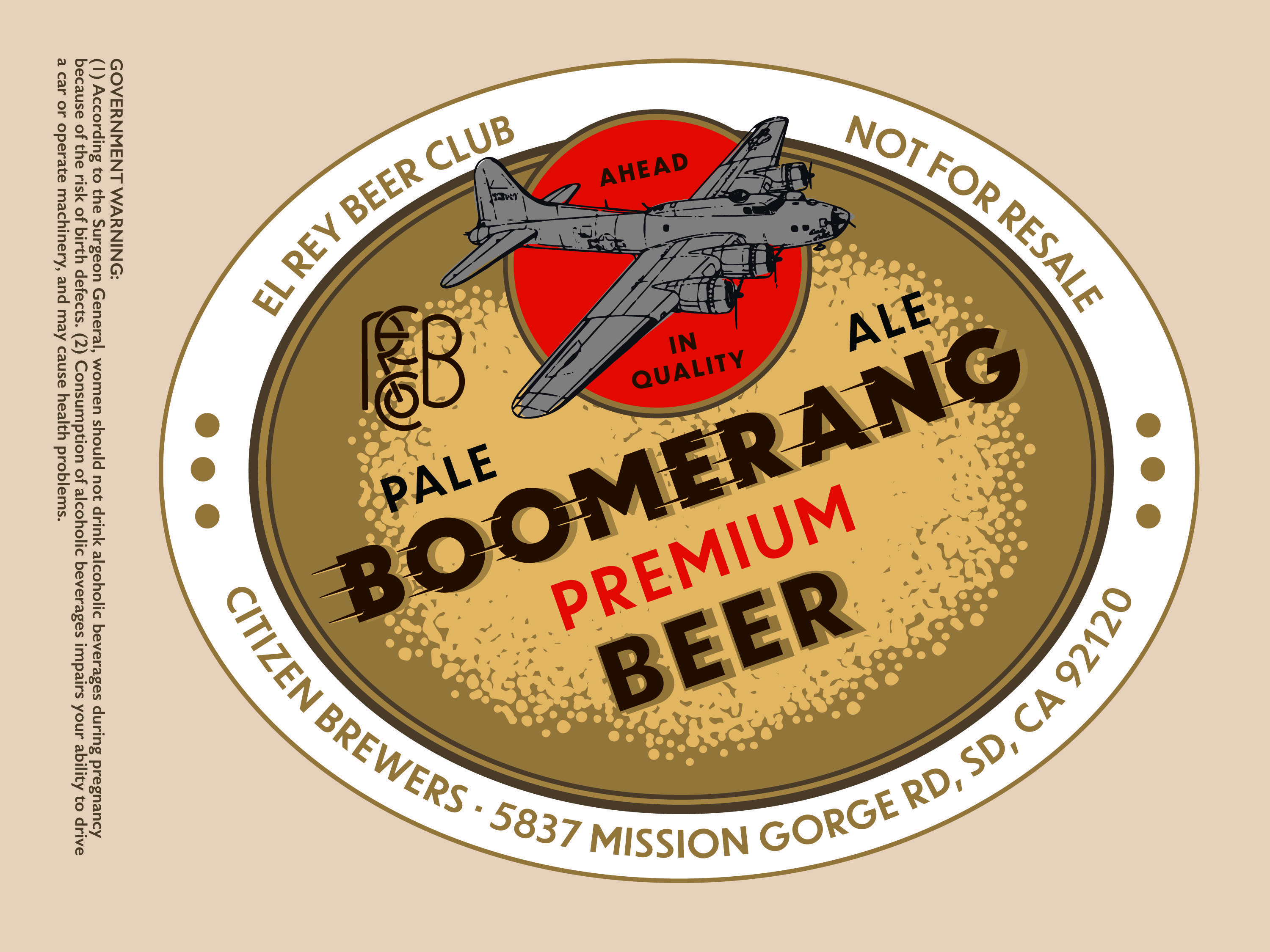
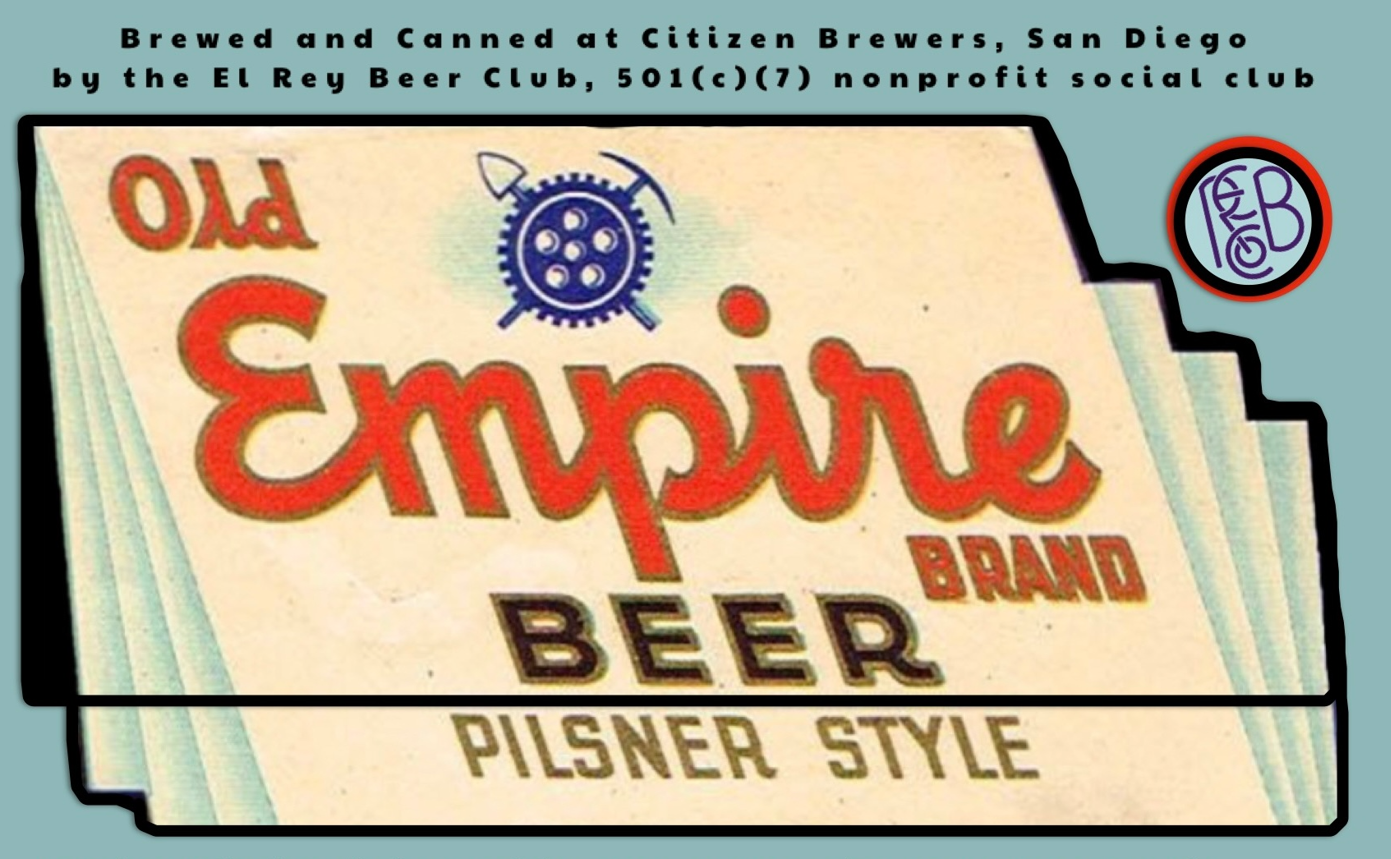
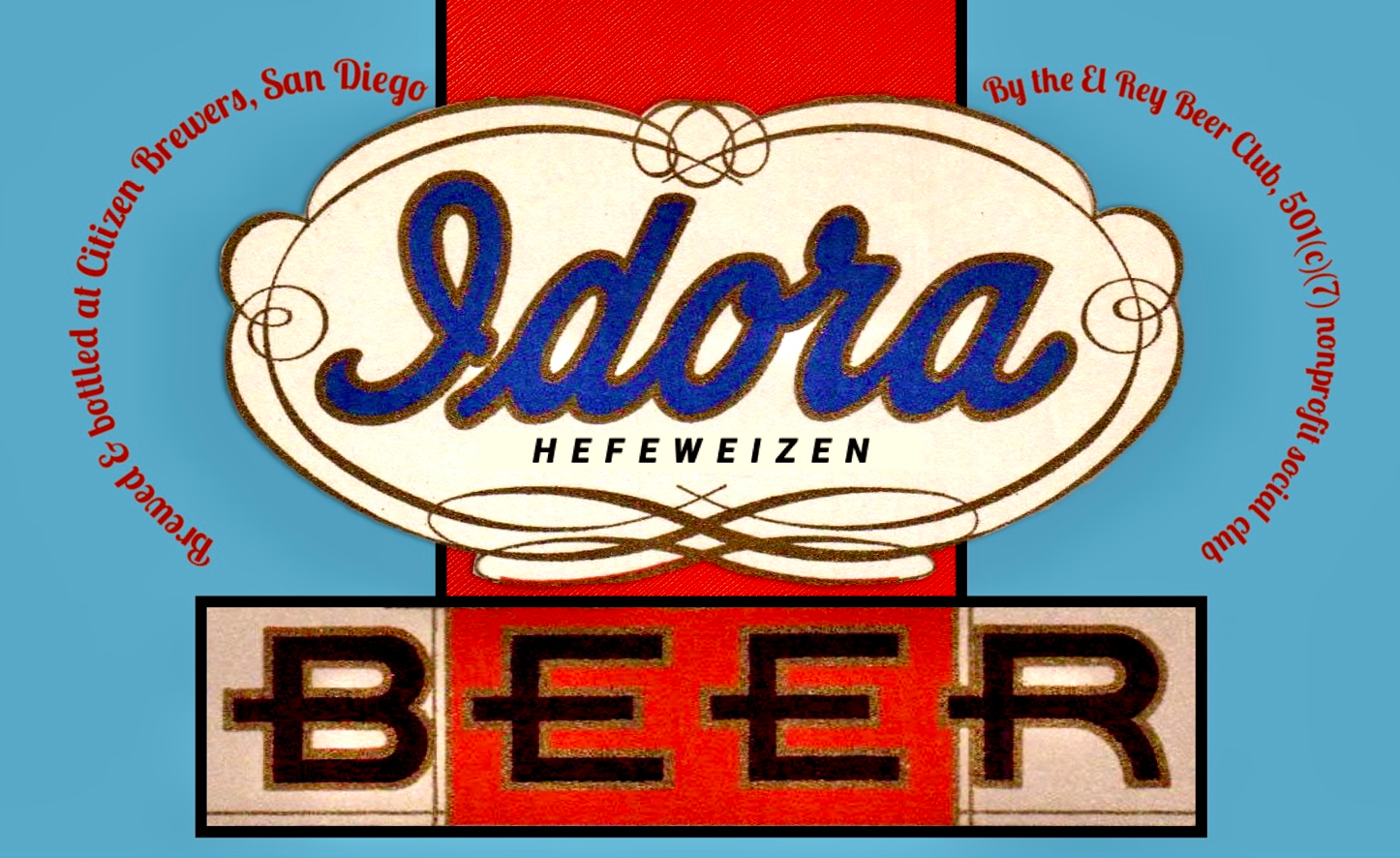
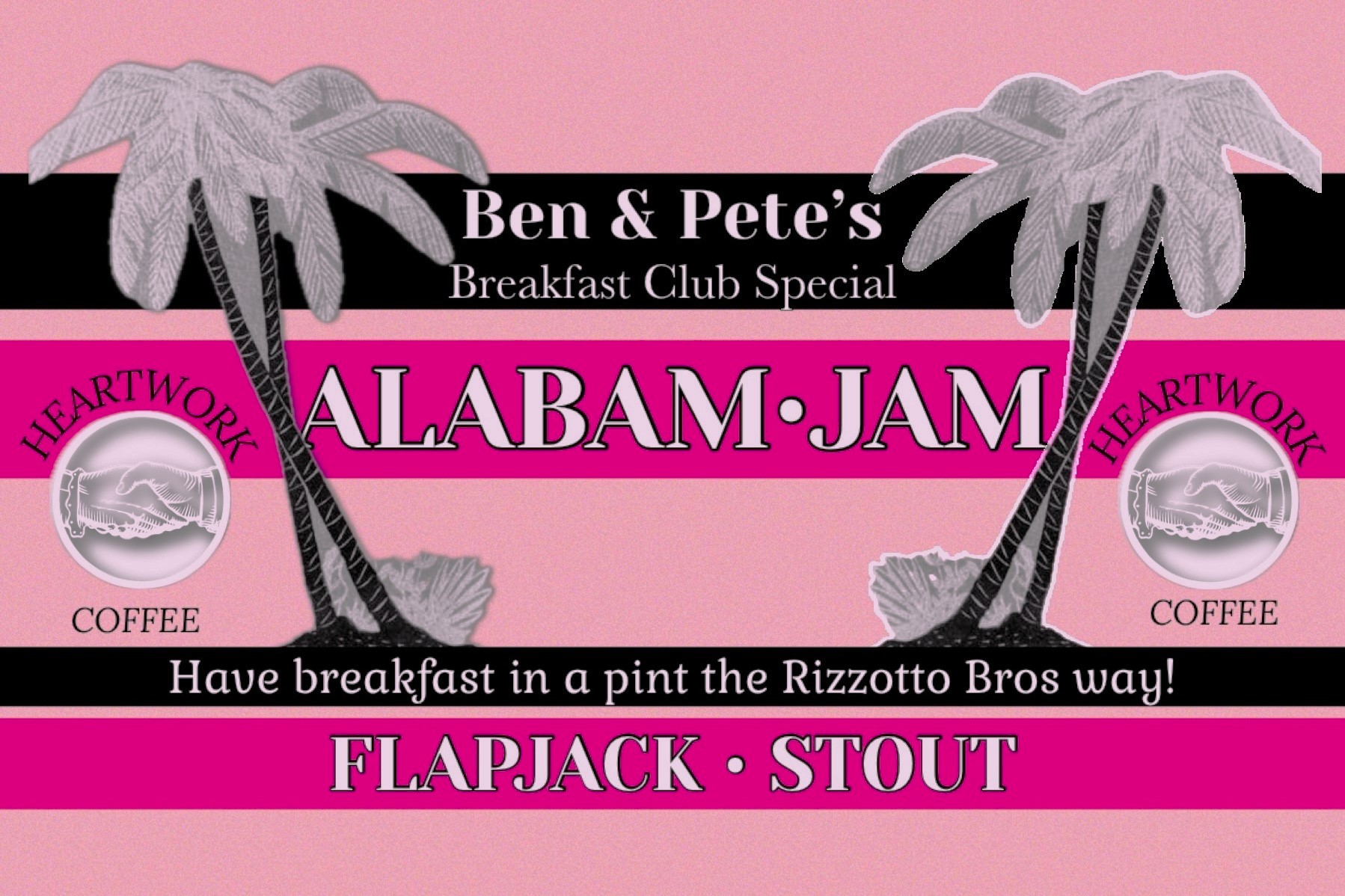
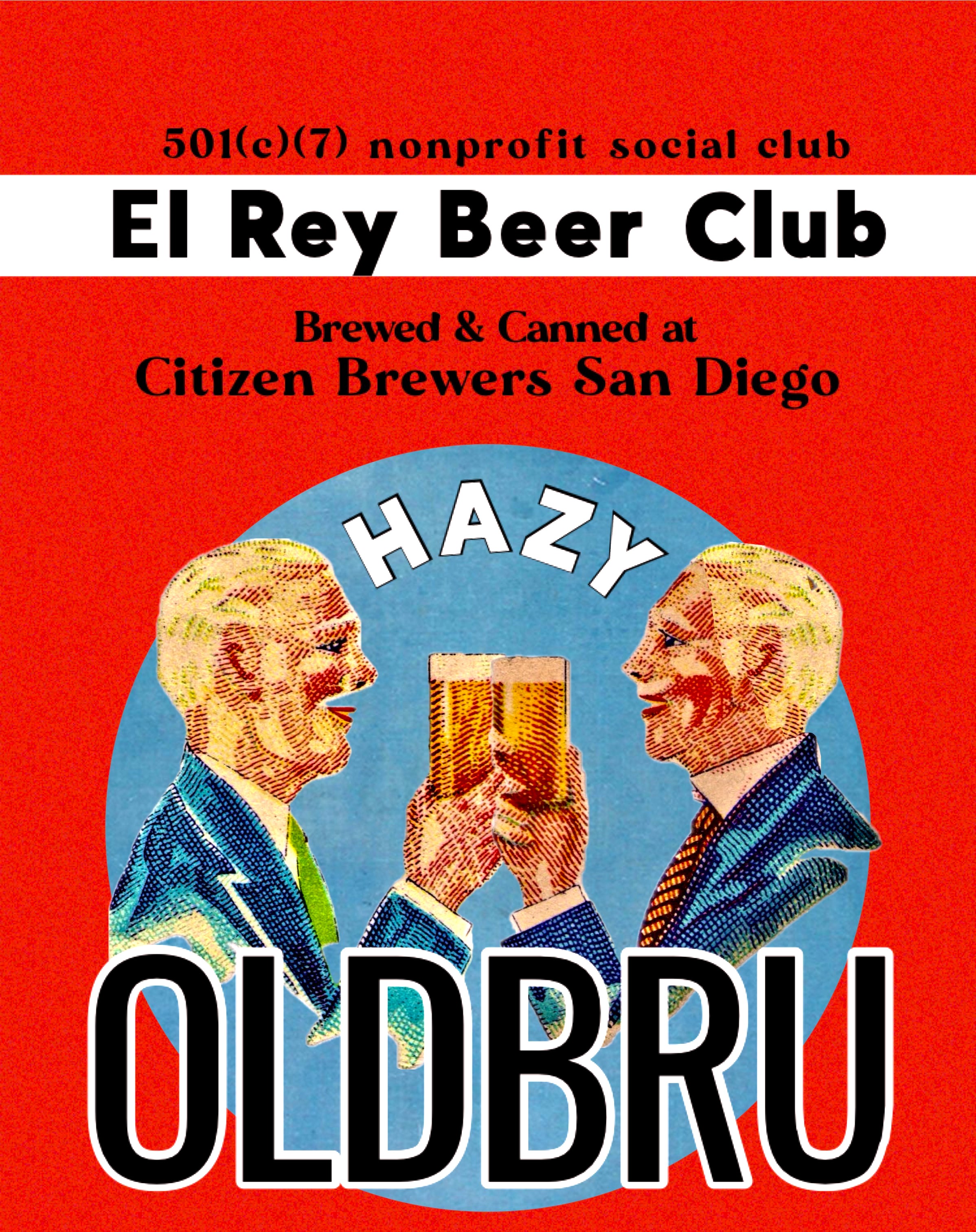
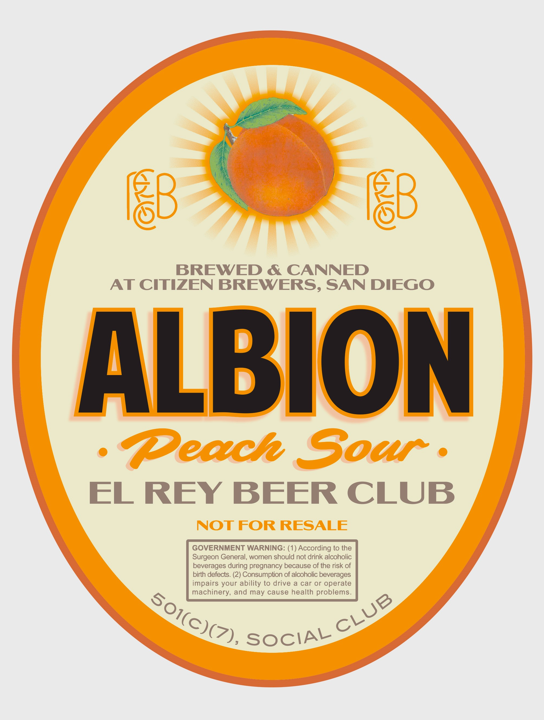
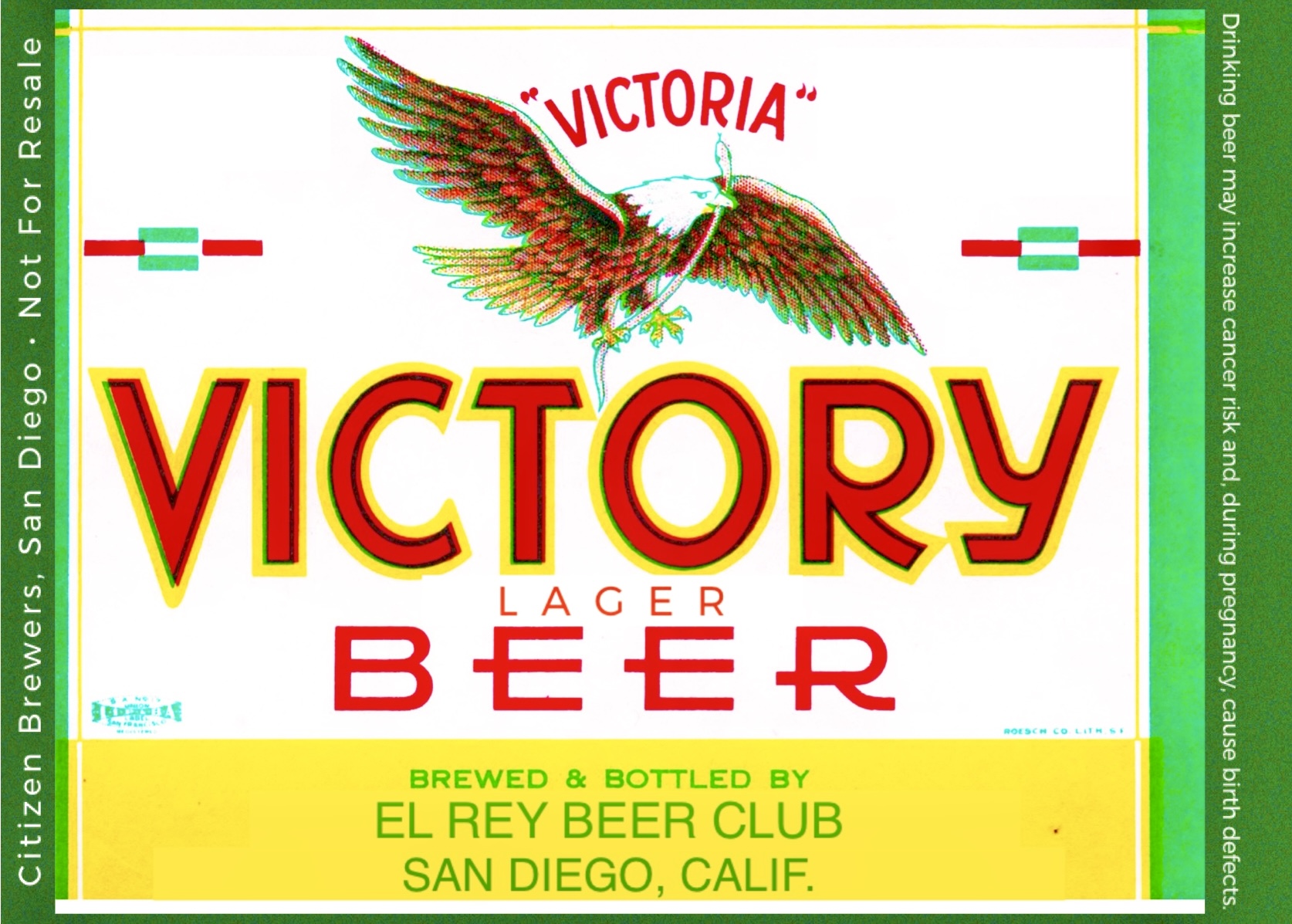
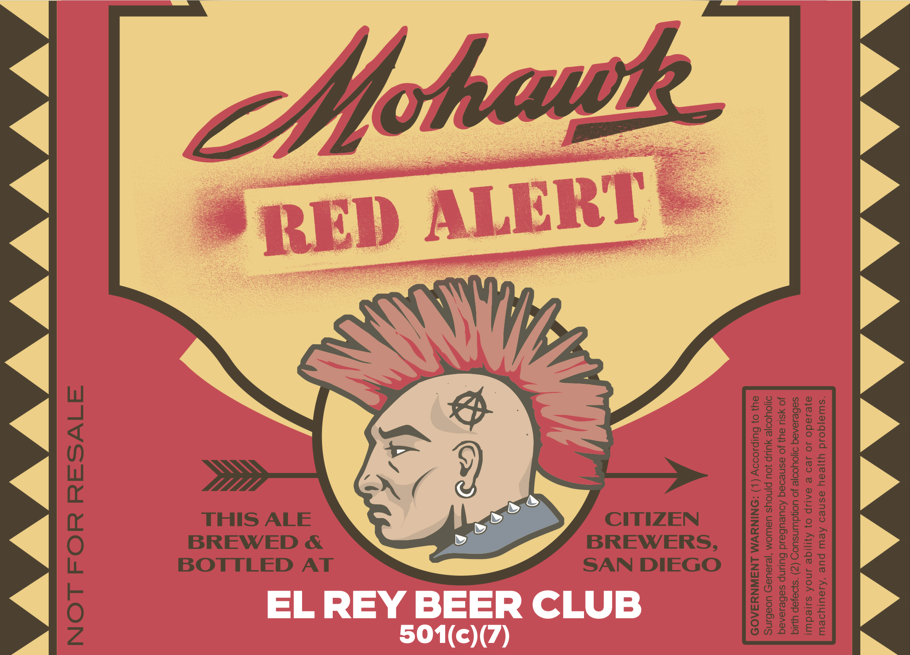
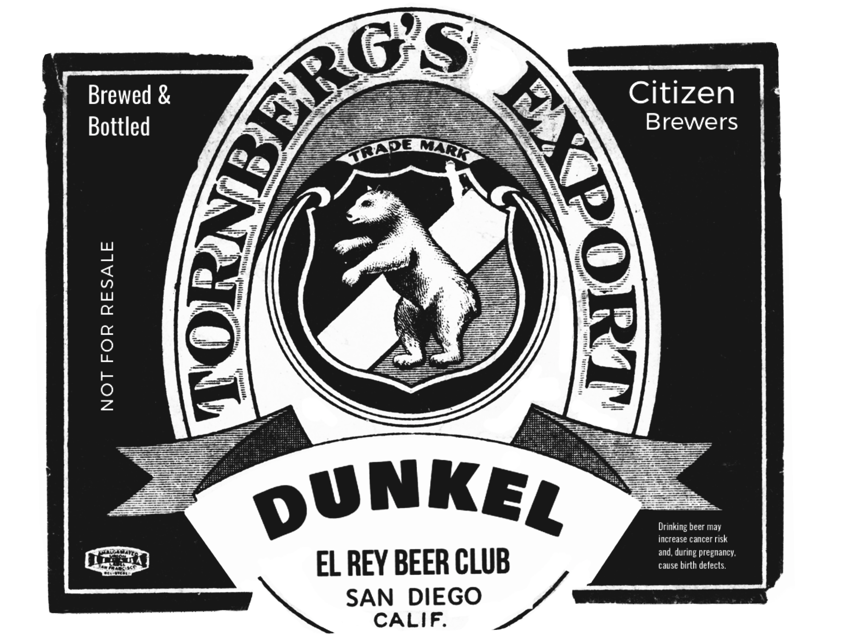
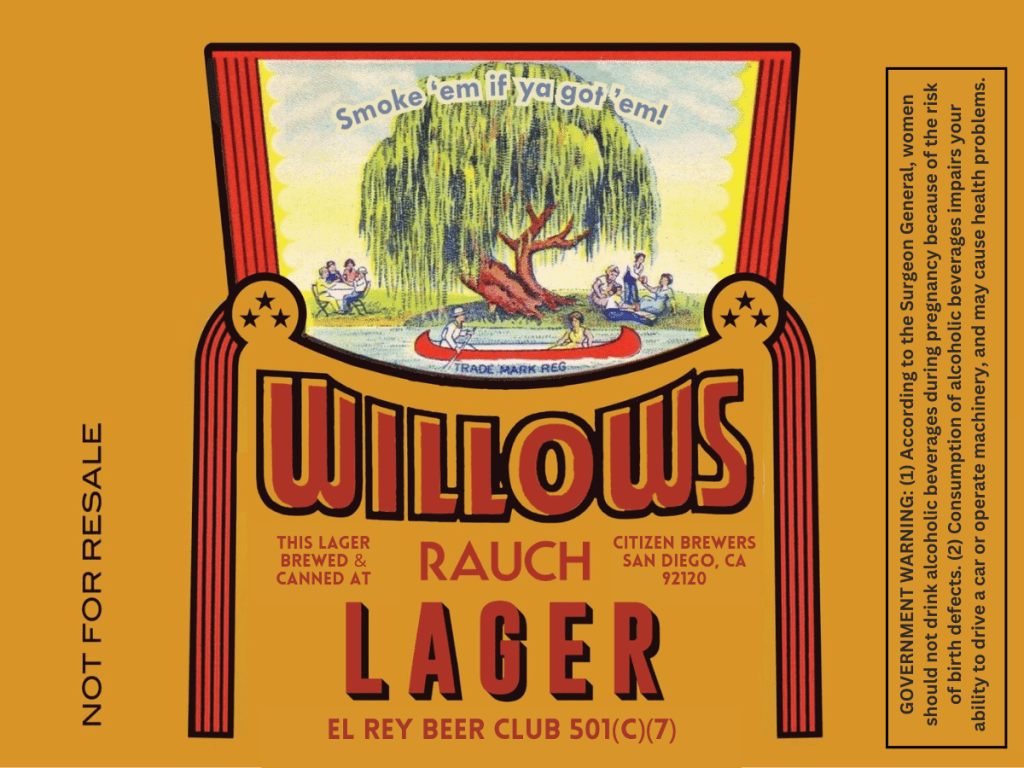
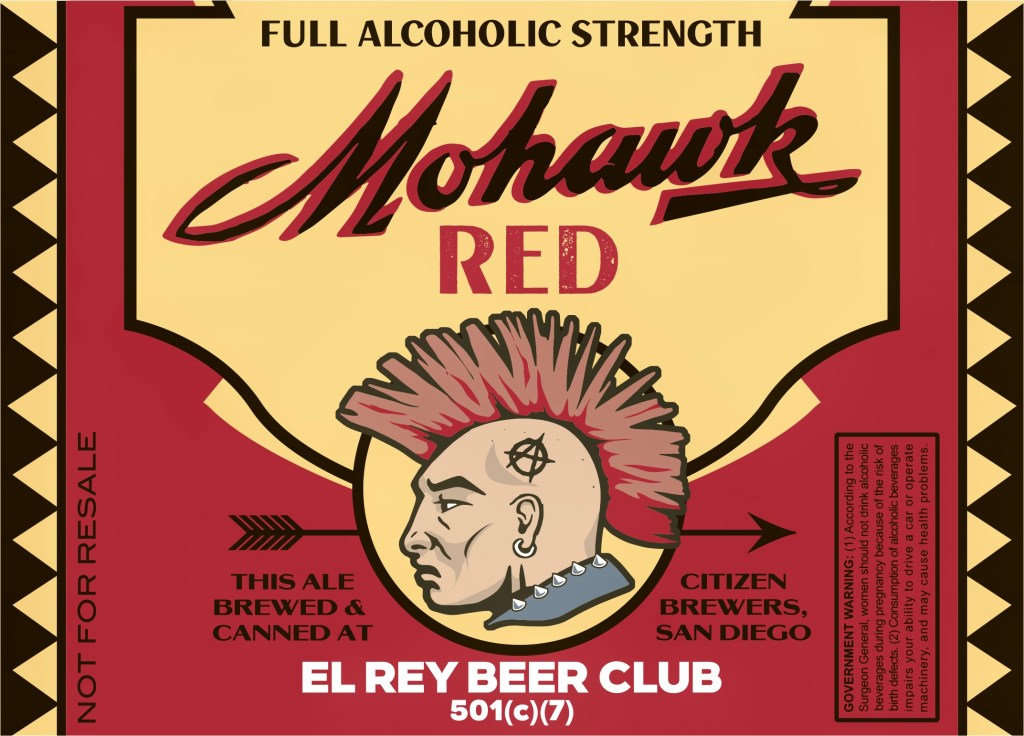
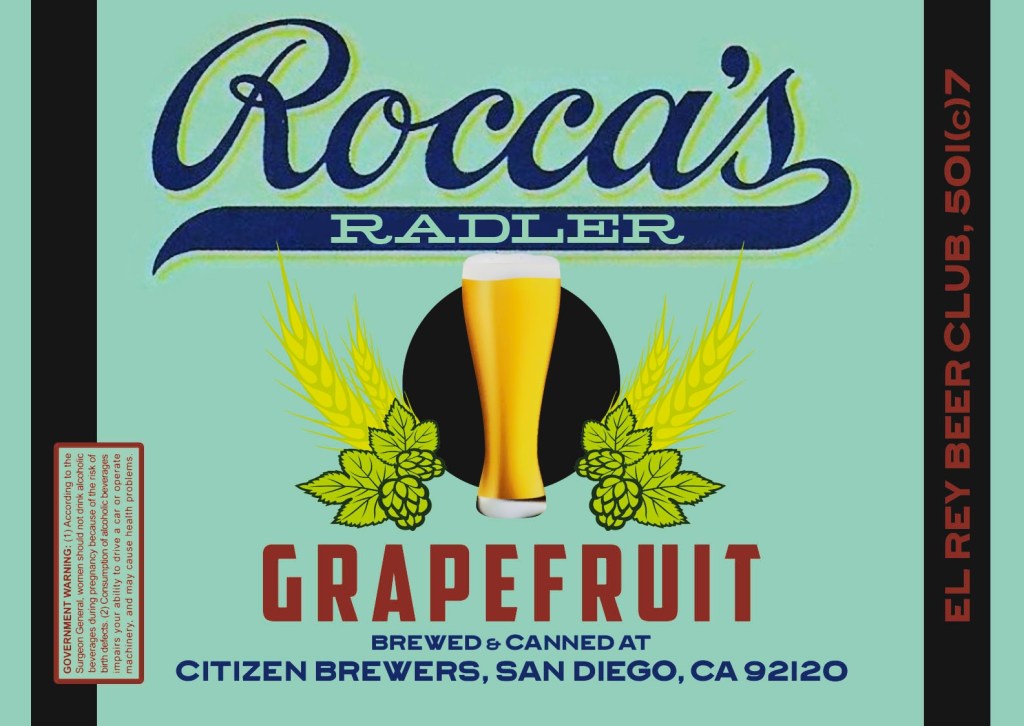
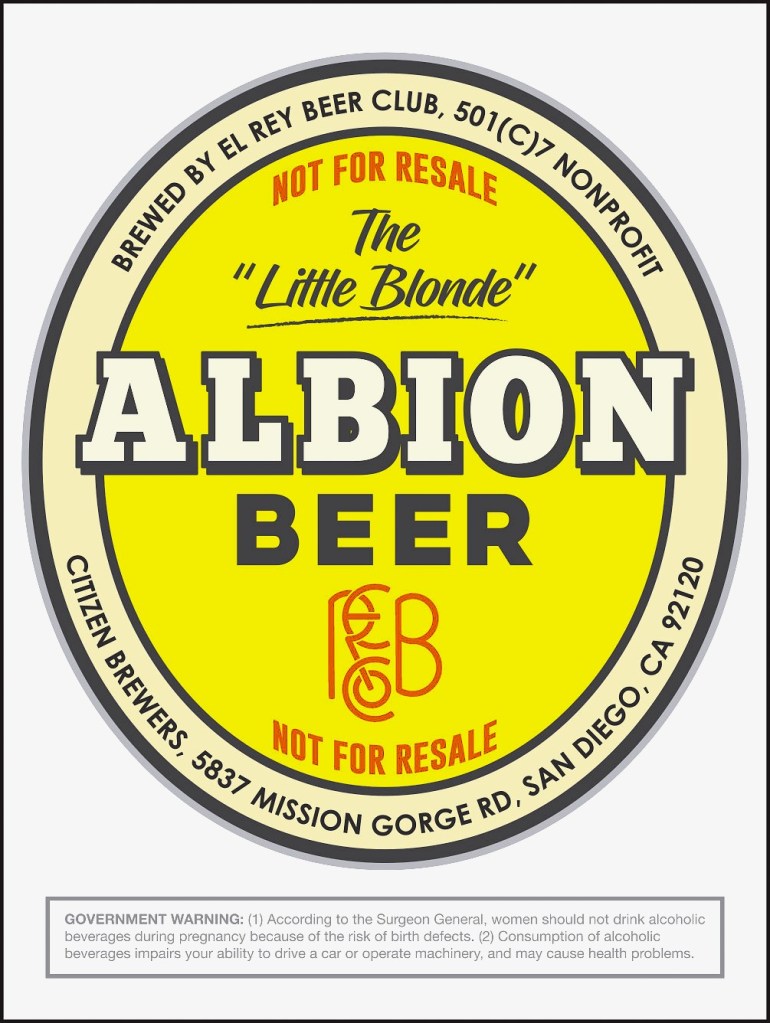
Beers Brewed by ERBC

End of Year Socials with ERBC, Inc
Our Tie To Steam Beer – the Tornberg Family
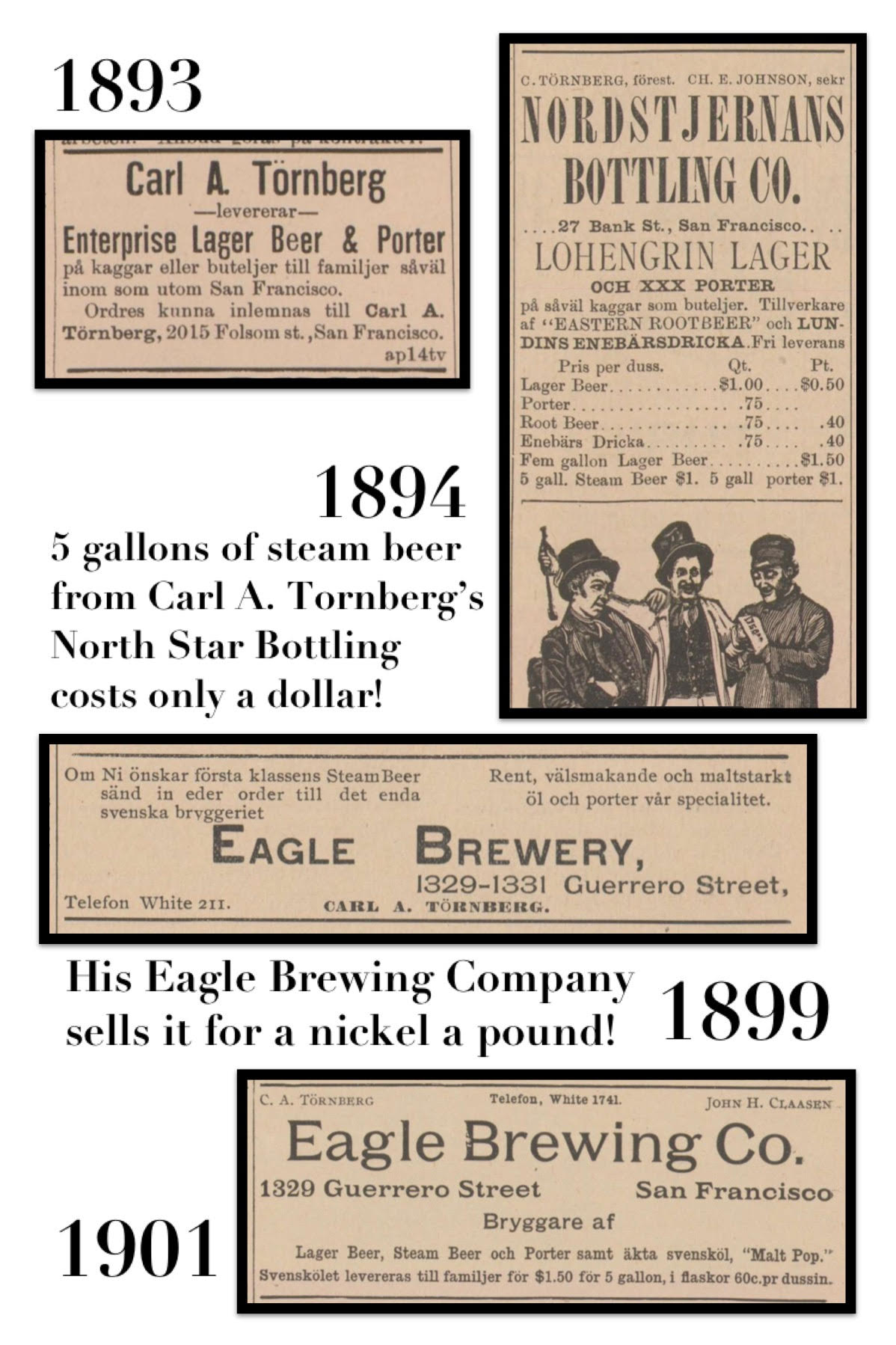
Although El Rey Brewing Co opened in April 1933, by then the facility at 5050 Mission Street already had a long history. Prior to Prohibition, the establishment served as home to the Eagle Brewing Co. But the story goes back even further. It begins with famed Bay Area brewer Carl A. Tornberg, known as the Avatar of Steam Beer. In 1894–two years before Anchor Steam opened its doors–Tornberg’s North Star Bottling was selling its steam in 5 gallon batches for just a dollar! And in 1899, his newly introduced Eagle Brewery offered it for only a nickel a pound! Although off to a good start, the new brewery faced adversity. When fire destroyed the Harrison Street facility in 1911, Eagle reemerged at 5050 Mission St–the future site of El Rey. But thanks to the 18th Amendment, the business went dark in 1920 (mostly, that is).
And Then Came El Rey
“It was too lively to get into a bottle”—Oakland Tribune
The cobwebs probably would have continued to gather if a Los Angeles oil man by the name of E. J. Preston hadn’t been stirred to action. President Franklin D. Roosevelt’s signature on the Cullen-Harrison Act served as the perfect motivator. In March of ‘33, the act pushed the legal cap on “near beer” all the way up to a whopping 3.2%, driving Preston to secure a U-Permit. When he reopened Eagle as El Rey Brewing Company, he also revived some old Bay Area favorites, like Eagle and Tornberg’s Original Old German. Six months later, another L.A. entrepreneur bought into the fold. When Big George Niotta took over the company, he furthered the Tornberg’s San Francisco legacy. Collaborating with Carl A. Tornberg’s son, Gunnar, El Rey began to brew Old Vienna and newer delights for the Tornberg family’s Consumers Bottling Company. Gunnar felt so pleased with the arrangement he even named one of his show horses El Rey.
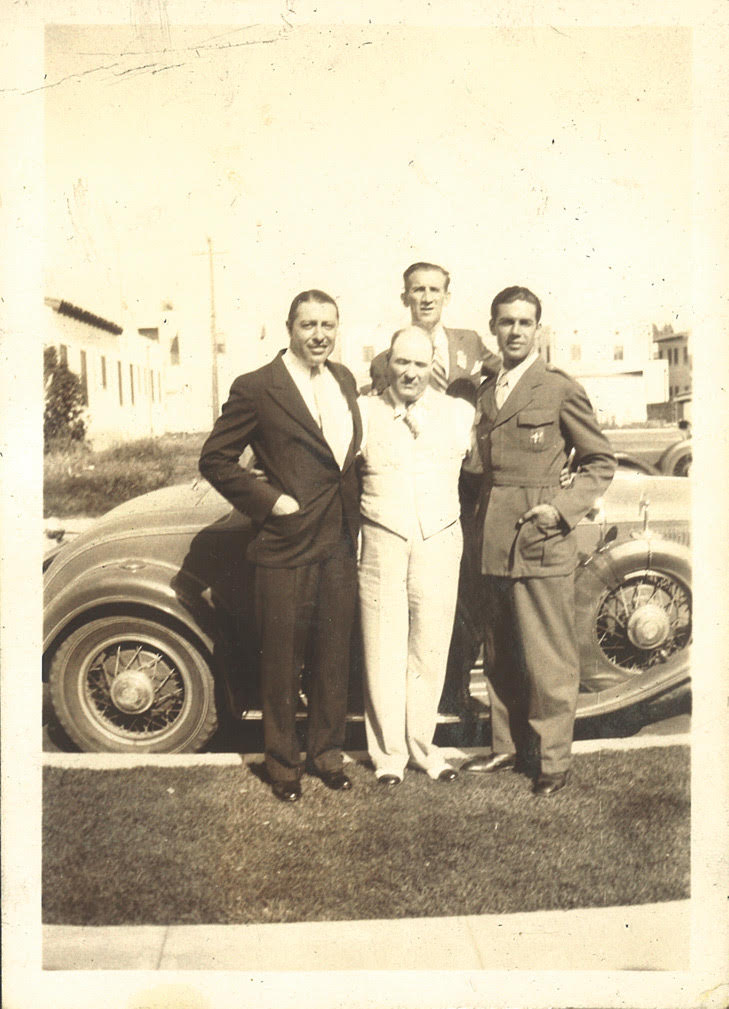
Big George in White

Oakland Tribune, October 20, 1933
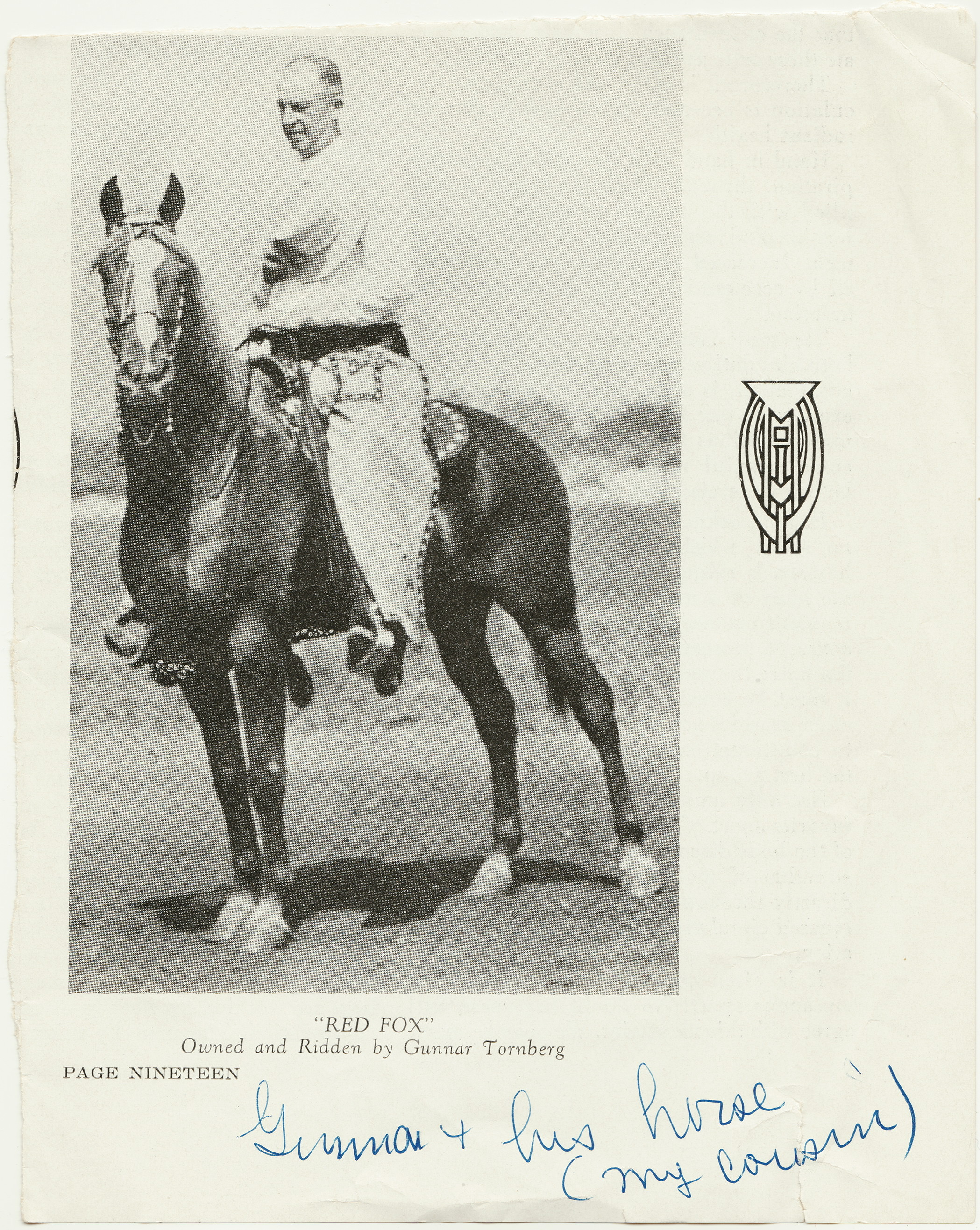

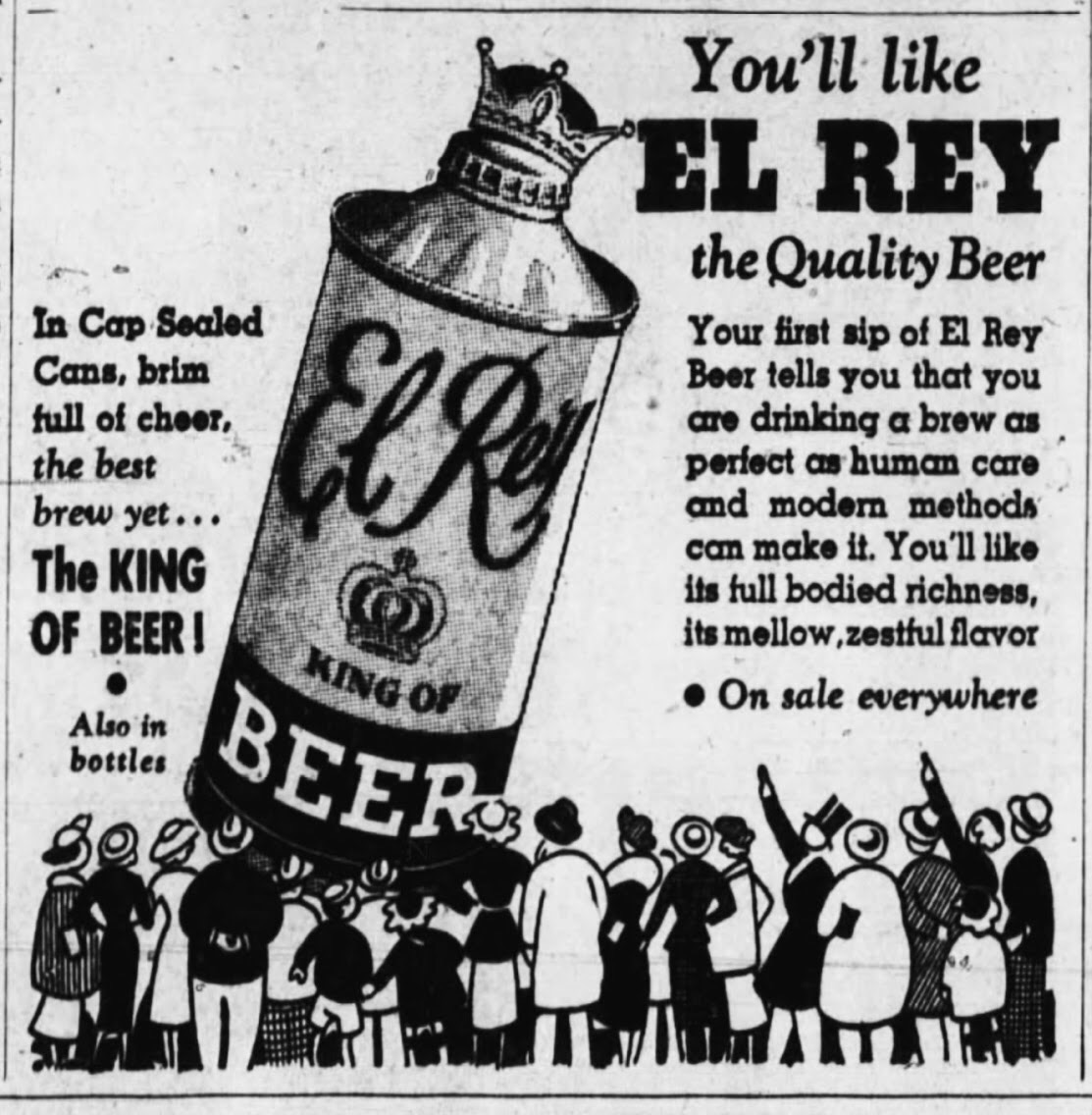
Going back to at least 1903, Budweiser ads read “the king of bottled beers,” but shortly after El Rey opened, West Coast papers began referring to the Brewery as the reigning “King of Beer” and even “King of All Beers,” and for good reason–for those who don’t speak spanish, El Rey translates to “The King.” Like Eagle before it, El Rey chose to specialize in steam, yet many felt this type of beer couldn’t be made at the new legal limit. Alleviating worries, Gunnar Tornberg assured the press it could . . . and El Rey proved him right, though they did brew quite an assortment of other styles.
Once repeal set in, the beer in the bottle at El Rey went from 3.2 to “full force 4” and “Full Alcoholic Strength” 5 1/2%. Melding a little of the old with a little of the new, Big George’s brewery tried something different. “Every advantage is taken of modern science and laboratory methods.” While the competing Anchor Steam reopened using its former practice of krausening to naturally carbonate, El Rey embraced the newer technology. And during her reign in the second half of the 1930s, El Rey sold roughly three times as many gallons of Beer as Anchor annually!

Although steam beer sits in the microbrewery realm these days, it originally held a raw, working class vibe, along the lines of PBR. Perhaps that’s why most now call it “California Common.”
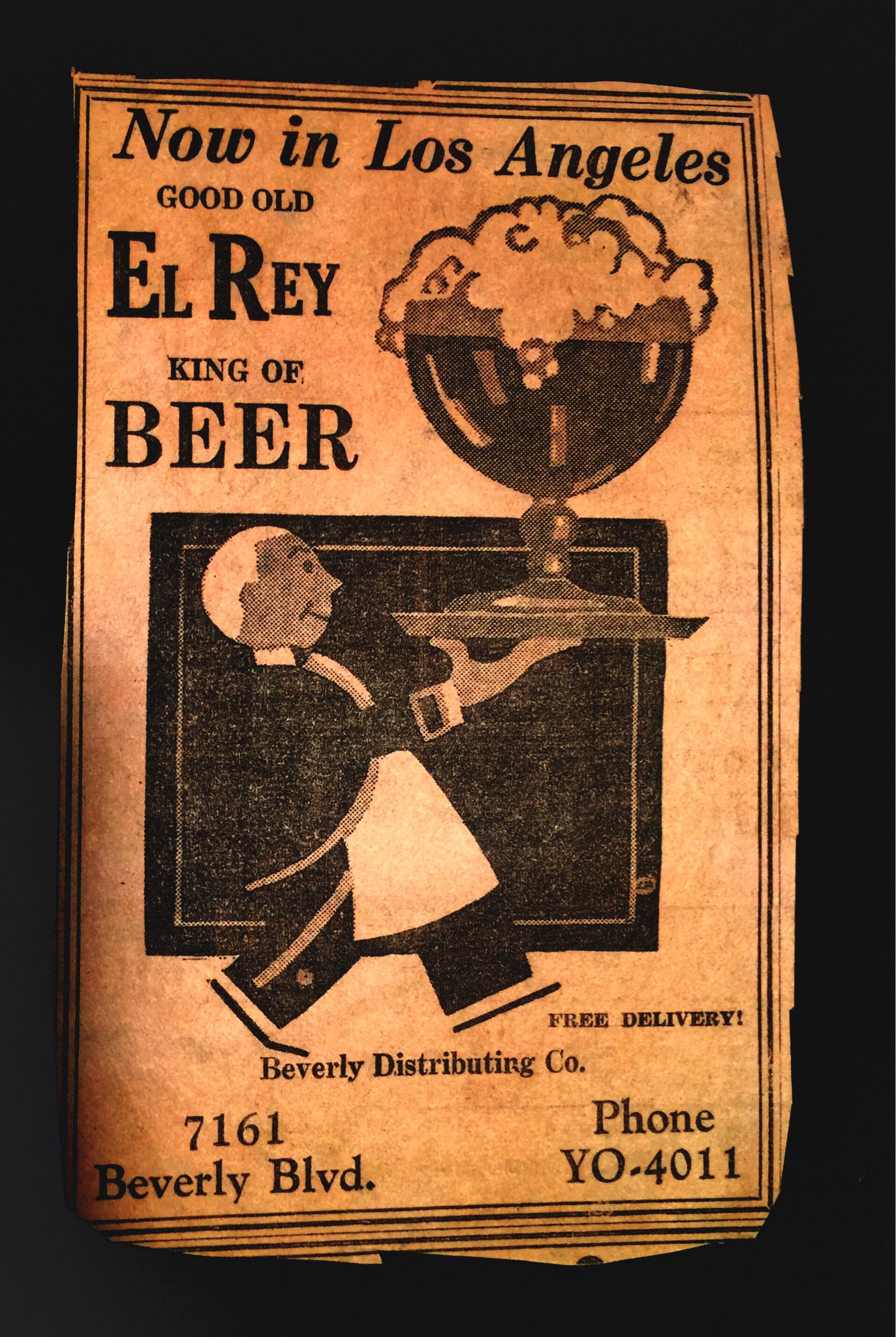
El Rey Beer ad, Santa cruz sentinel, july 1, 1937
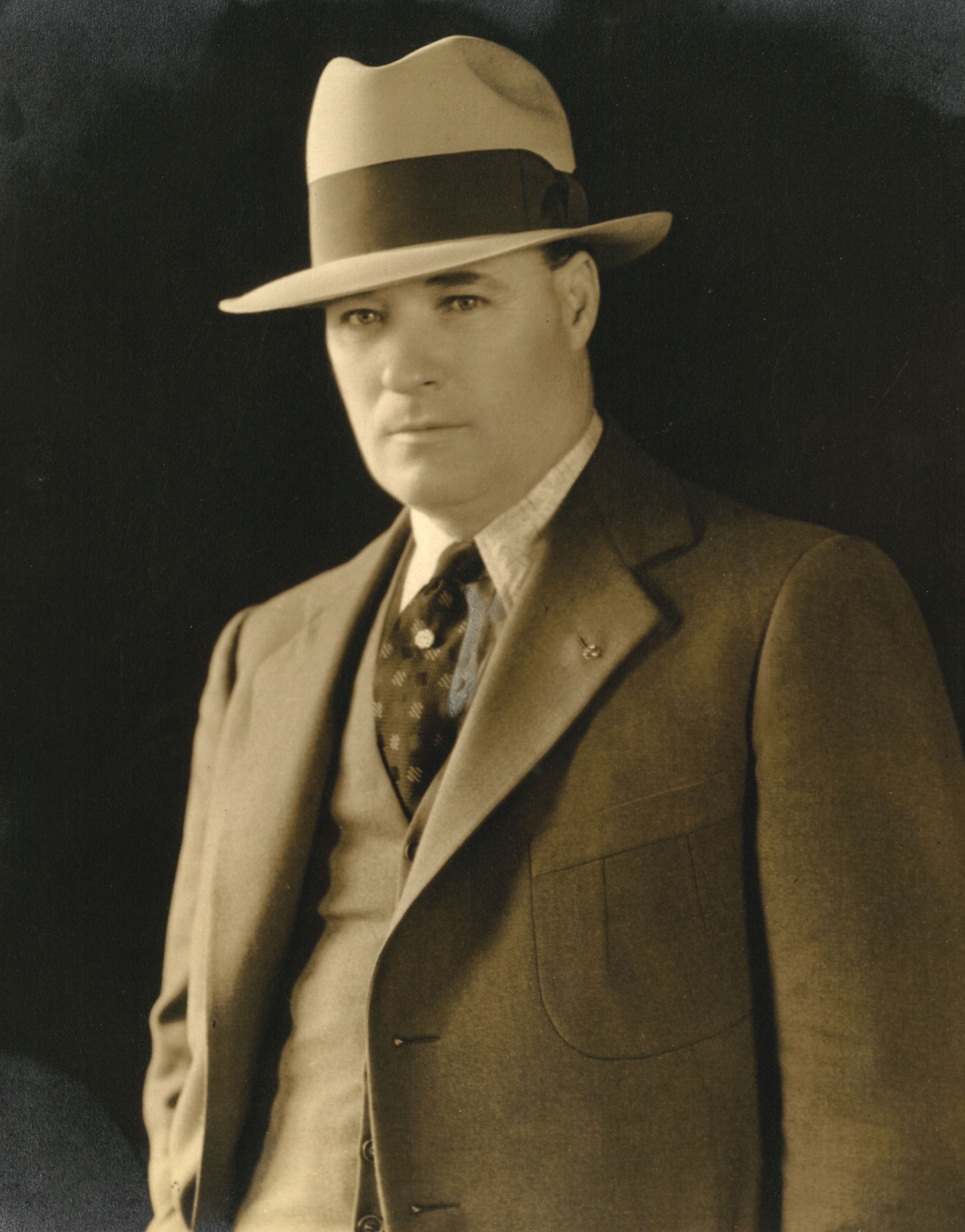
Big George Niotta, circa 1936

Big George’s take over wasn’t the only change at El Rey. In 1934, he revived EAGLE BREWING Co under El Rey as a separate corporation, bringing in a lawyer as a partner for good measure. And as George’s grandson (also a George) explained, “Breweries owned baseball teams” and “George Niotta had a baseball club with the brewery.” The younger George even bragged one of the star players was Dom DiMaggio, kid brother to the slugger, Joe.
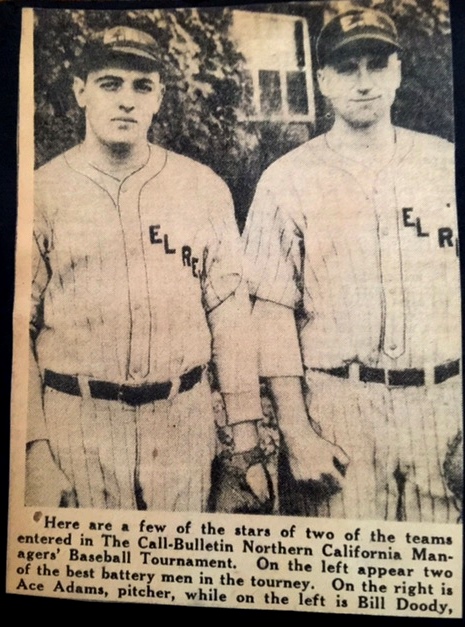
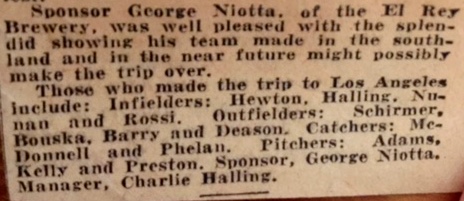
According to the press, the El Reys were “Rated as one of the best semi-pro teams in the bay district.” And their sponsor Big George was anything but fair weather. San Franciscans quickly learned that L.A. transplant “George Niotta, sporty sponsor of El Rey Beer team, believes in doing things first class.” In addition to arranging games at Catalina Island and Los Angeles, he made frequent gestures of good will. George was certainly invested, and was quickly “rated the best bush baseball sponsor since the death of Jack Blum.”

El Rey Beer Club Pres J. Michael Niotta & his cousin George Niotta (1934 – 2018).
We miss your stories!

The year before Big George bought El Rey, the 1932 Italian Olympic team took time out from competing to have dinner with the Niotta family.
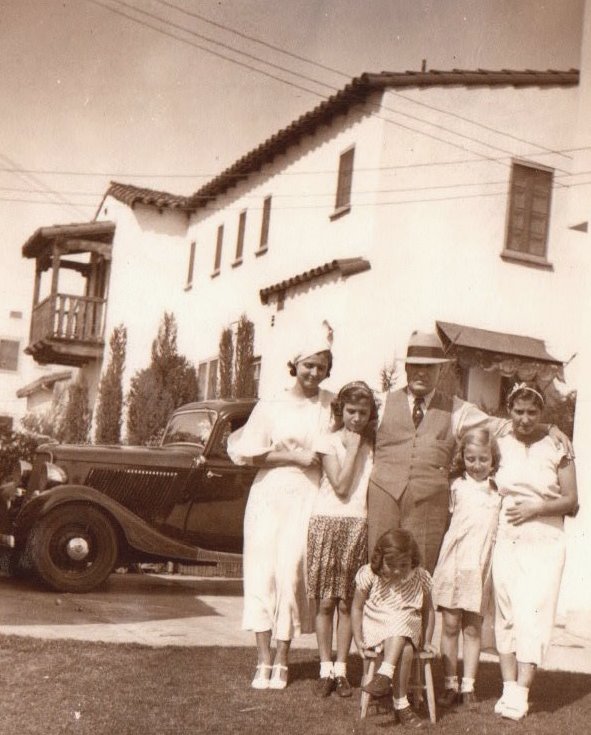
Big George Niotta with his daughters and grandaughter in front of their Wilshire District home, circa, 1934.

Big George pouring a cold one at one of his neighborhood bars, likely Gerrie’s, circa 1942
And Then Beer Came In a Can
In 1935, when the brewery team was actively playing—and winning—the world of beer got turned for a gigantic loop. Beer was no longer exclusive to a bottle! Collecting beer and alcohol memorabilia is a popular and profitable industry. Depending on condition and scarcity, the early artifacts go for top dollar, and among the hardest to come by can-wise are the cone tops. Between the years 1935 and ’38, El Rey Brewing company put out “one of the most colorful groups of low profile cone tops” on the market.
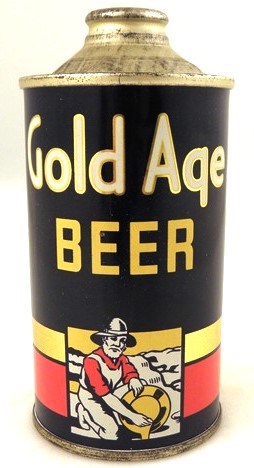
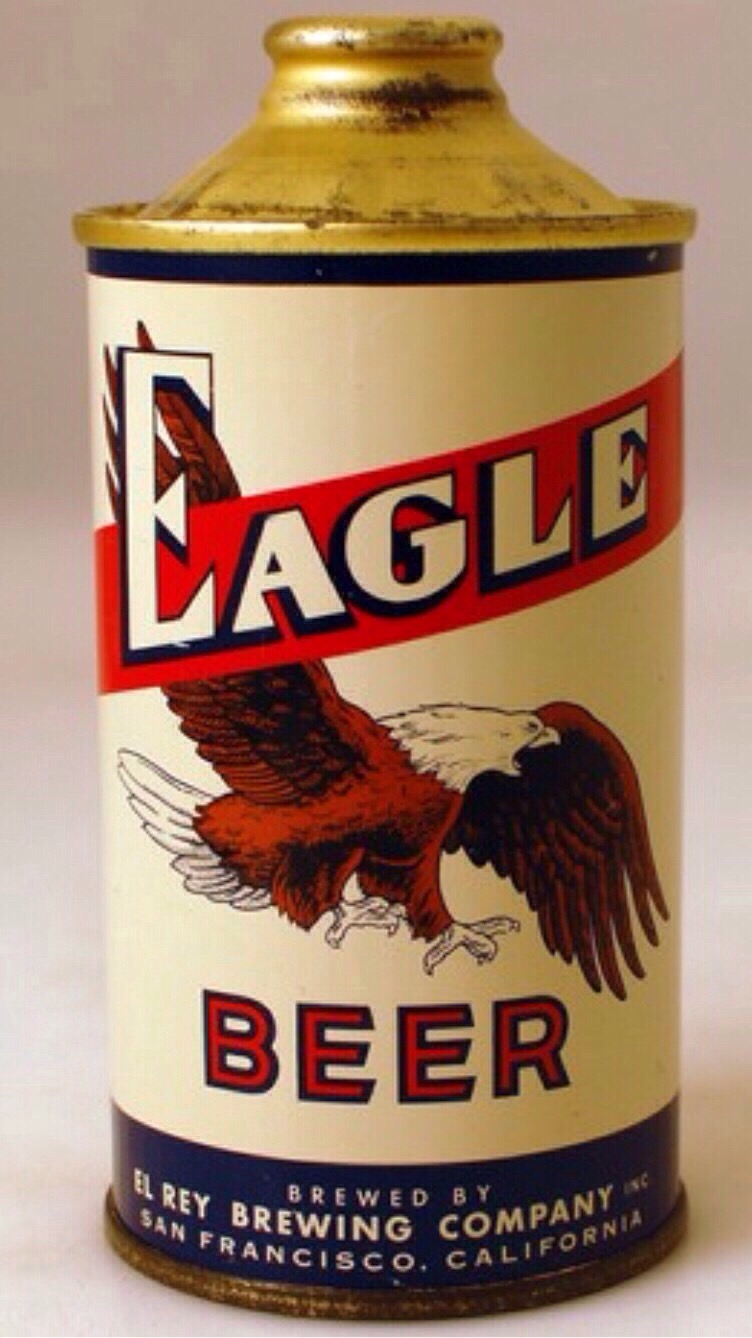
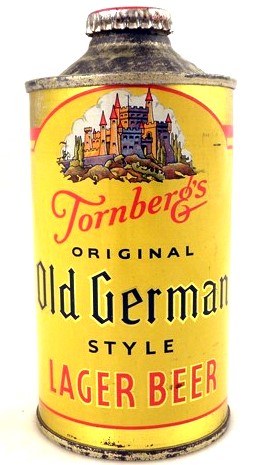
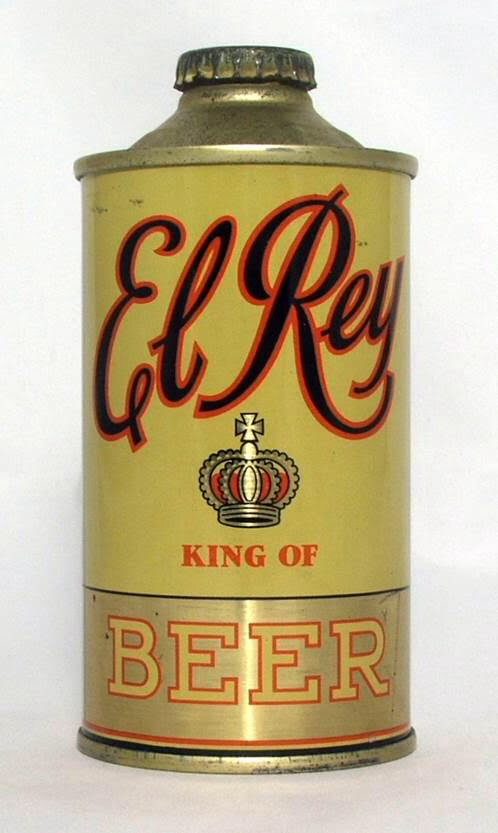
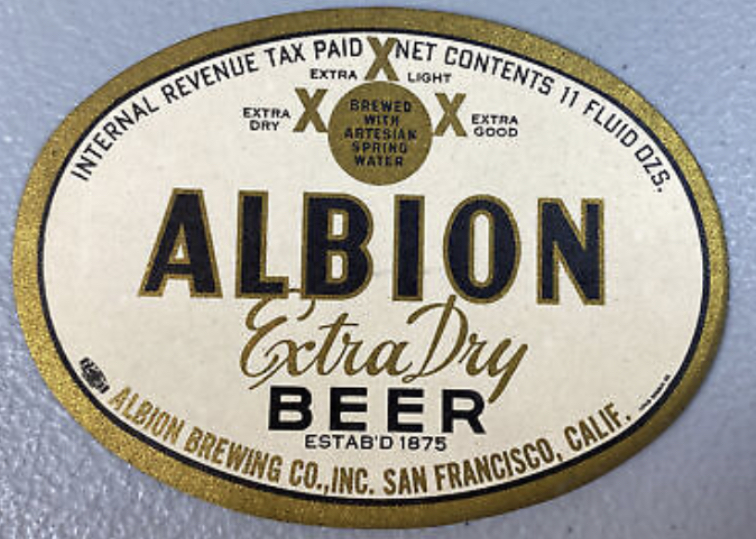
Sometime in the middle-1930’s, Big George left the El Rey fold. But that wasn’t the only drastic change. By the summer of 1938, El Rey not only reintroduced an old San Francisco favorite—Albion Ale—they renamed the business! Unfortunately, the switch to the Albion title did little to save the corporation from financial woes. Early in 1941 Albion filed for bankruptcy. Delaying the inevitable, the proceedings were held up by a pending court case. In an effort to achieve industry wide uniformity, the Board of Equalization placed restrictions on beverage container sizing. Albion and the Colorado-based, Adolph Coors Brewery. each had smaller, signature eight ounce cans that the board targeted. Despite a courtroom victory, the company folded. But the resilient plant at 5050 Mission carried on once more, reopening under its original Eagle title shortly after bankruptcy. Unfortunately this too proved short-lived. Eagle closed shop for good in 1942. As it turned out though, this wasn’t to be the end of El Rey Beer!
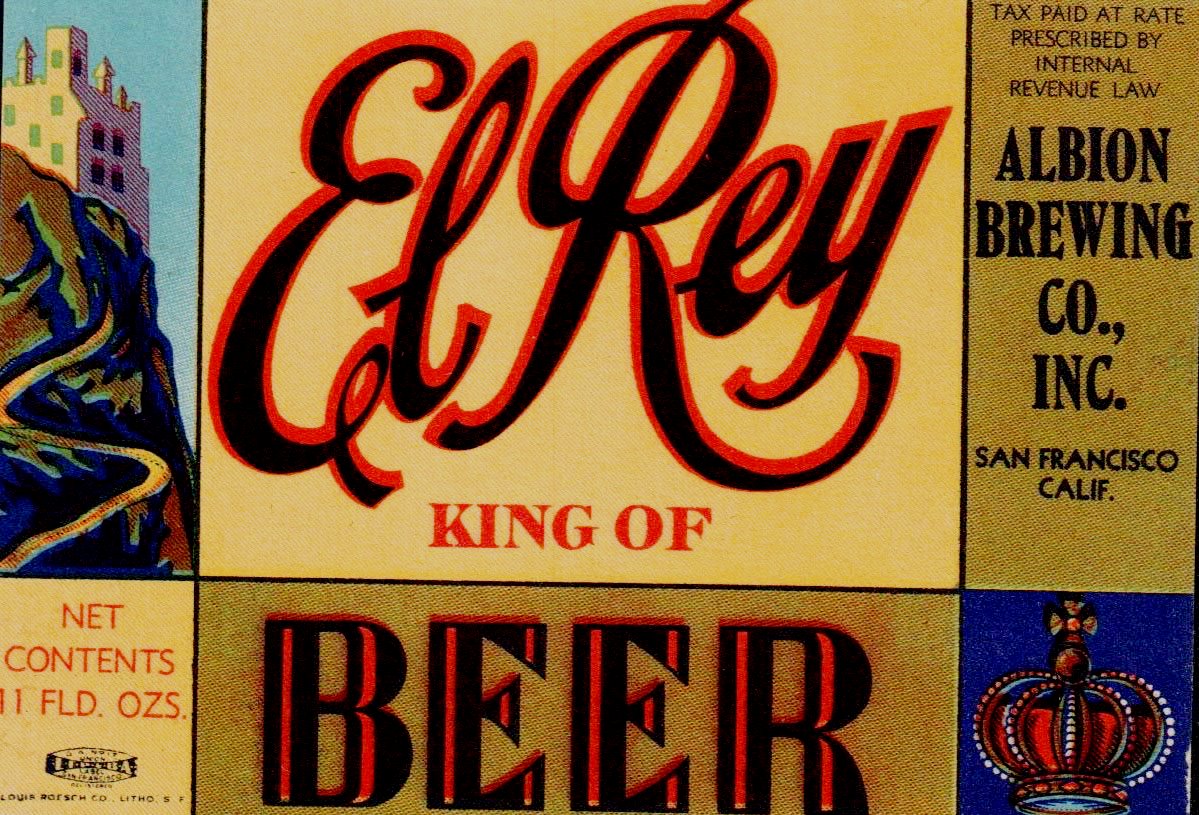

El Rey Beer Resurgence & Legacy
In 1956, when El Rey Brewing Company’s former competitor, Grace Bros, ran into some financial issues, their Los Angeles brewery was bought out of bankruptcy by Bohemian Distributing. They renamed it the Southern Brewing Company.
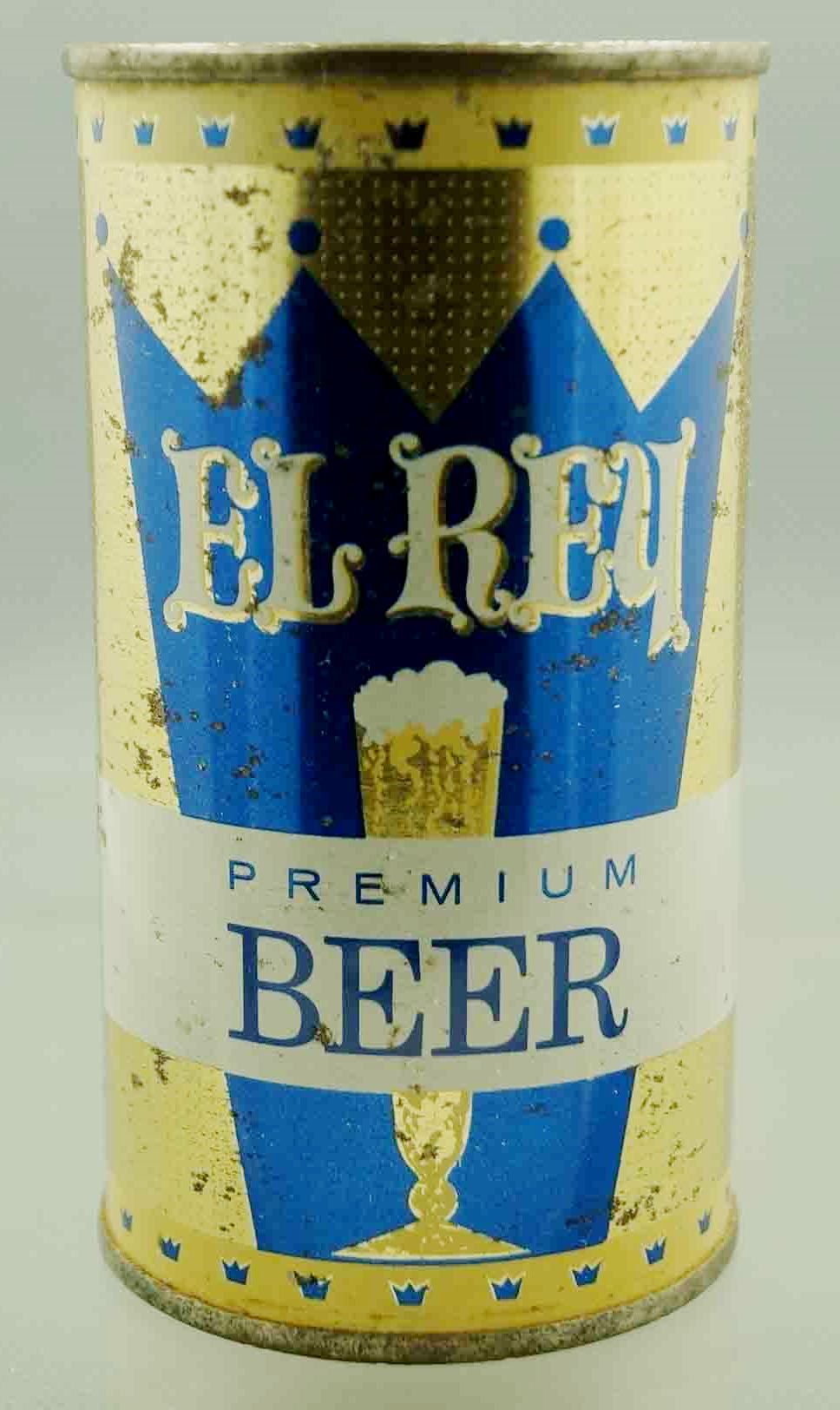
Grace Bros’ El Rey Beer Flat Top, circa late 1950’s
The rest of the family run Grace Bros facilities continued into the 1960’s and signed contracts to brew Bull Dog malt for Bohemian. And right around this time, some former El Rey Brewing Co products began to resurface. Grace Bros even brought back El Rey Beer in the flat top can! It’s possible that their new relationship with Bohemian led to this revival. Decades back, Big George Niotta sponsored the LA-based startup of fellow Italians, J.S. Foto and Frank Vitale. He helped fund the Bohemian Distributing Co.
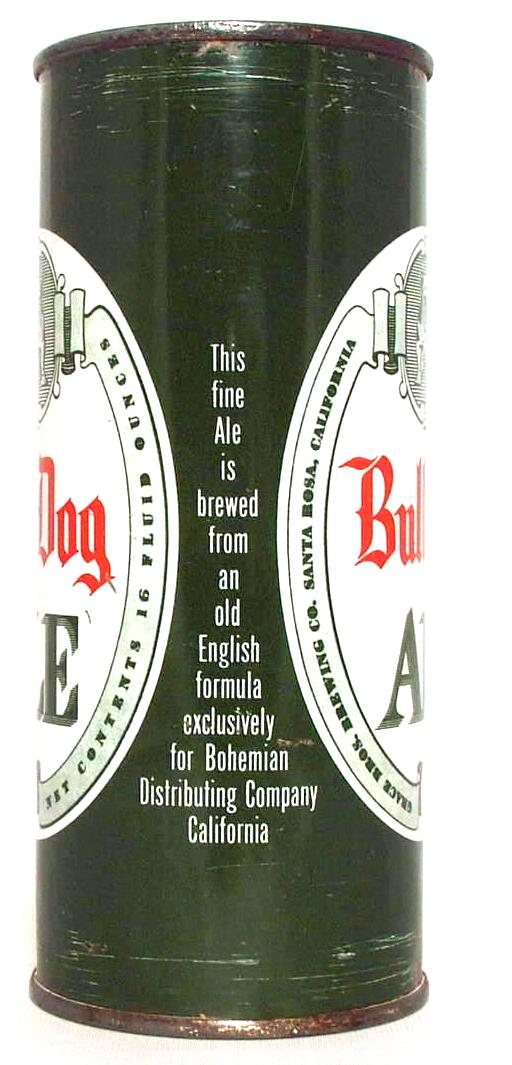
Bohemian’s Bull Dog brewed by Grace Bros
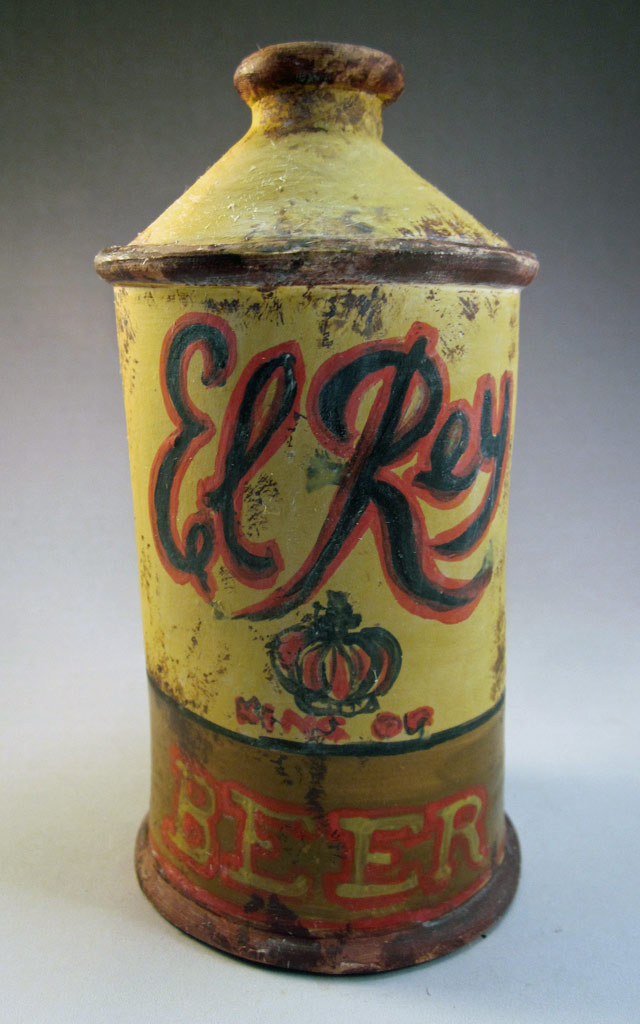
El Rey Beer ceramic art by Liz Crain
El Rey Beer Spawned a Casino and Club?
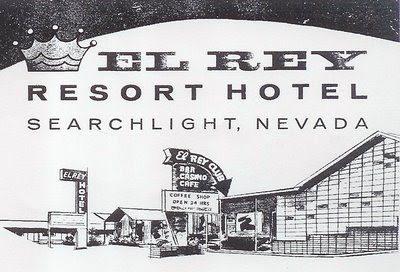
Apparently Big George Niotta’s brew had a big impact on another family. The Martello brothers were so enamored by the taste of El Rey, they decided to name two of their clubs after the beer. One Club El Rey greeted patrons in Los Angeles’ Southgate and another in Searchlight, NV. The out of state location, which offered gambling and prostitution, served as the setting for Director Francis Ford Copolla’s first movie!!!
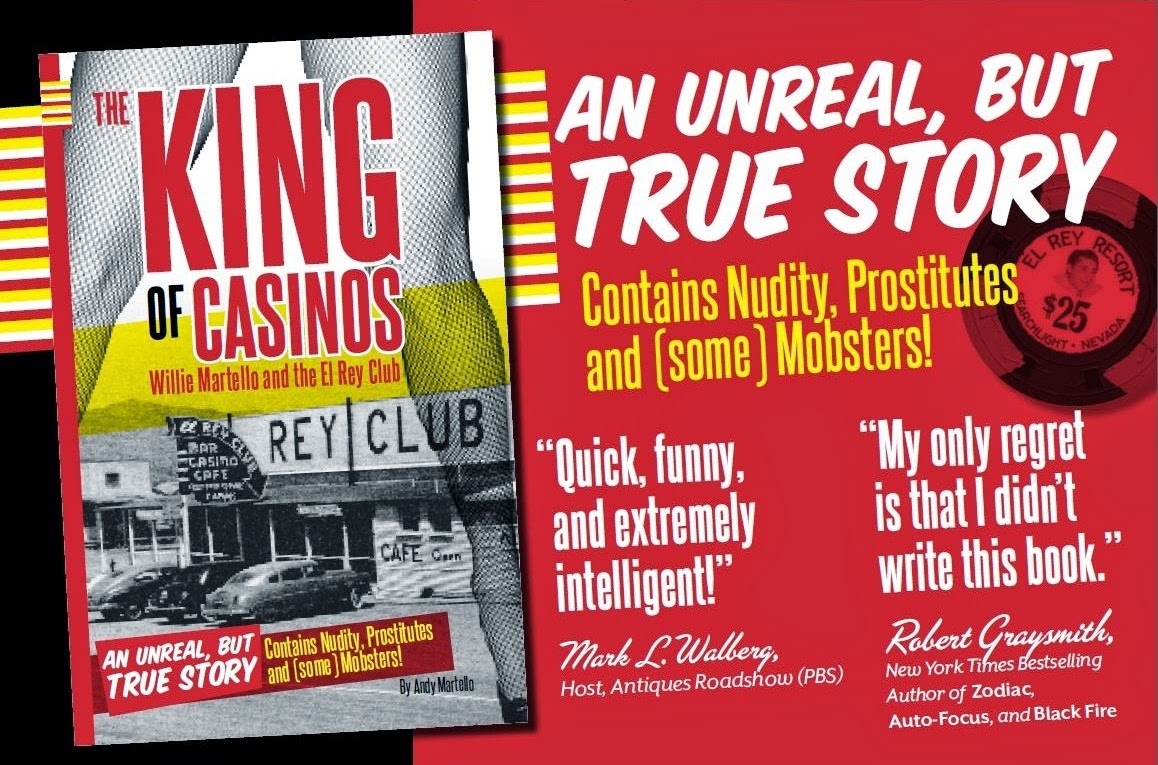
Read all about it in my pal Andy Martello’s award winning book!
And to learn more about the history of El Rey brewing company and the extraordinary life of big george niotta pick up a copy of The los angeles sugar ring!
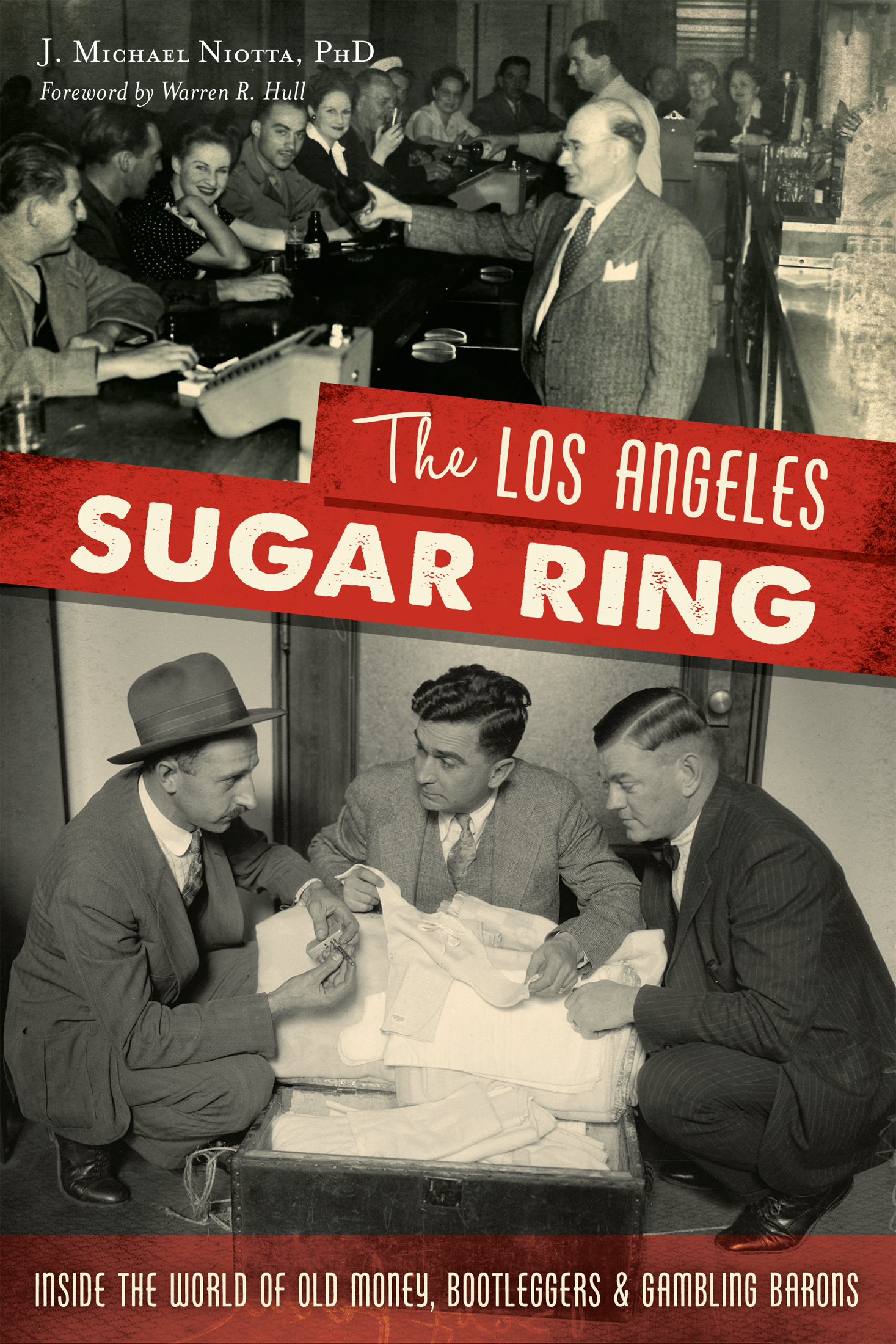
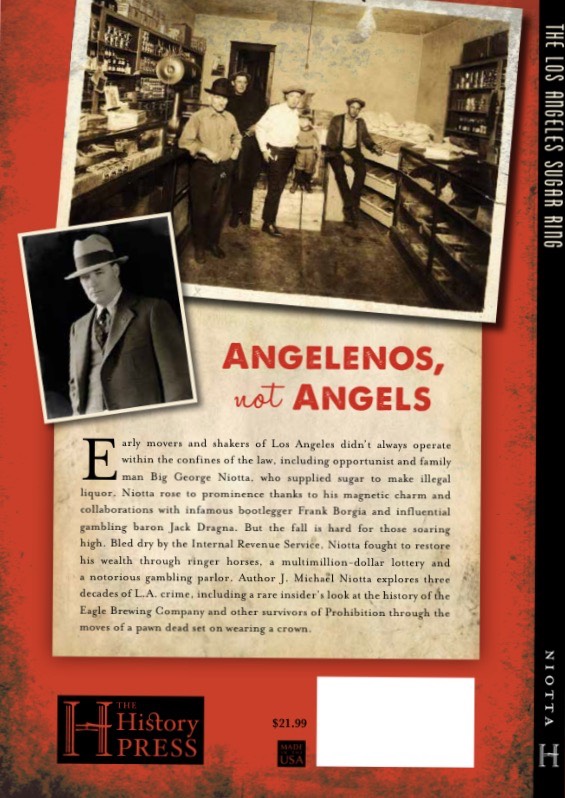
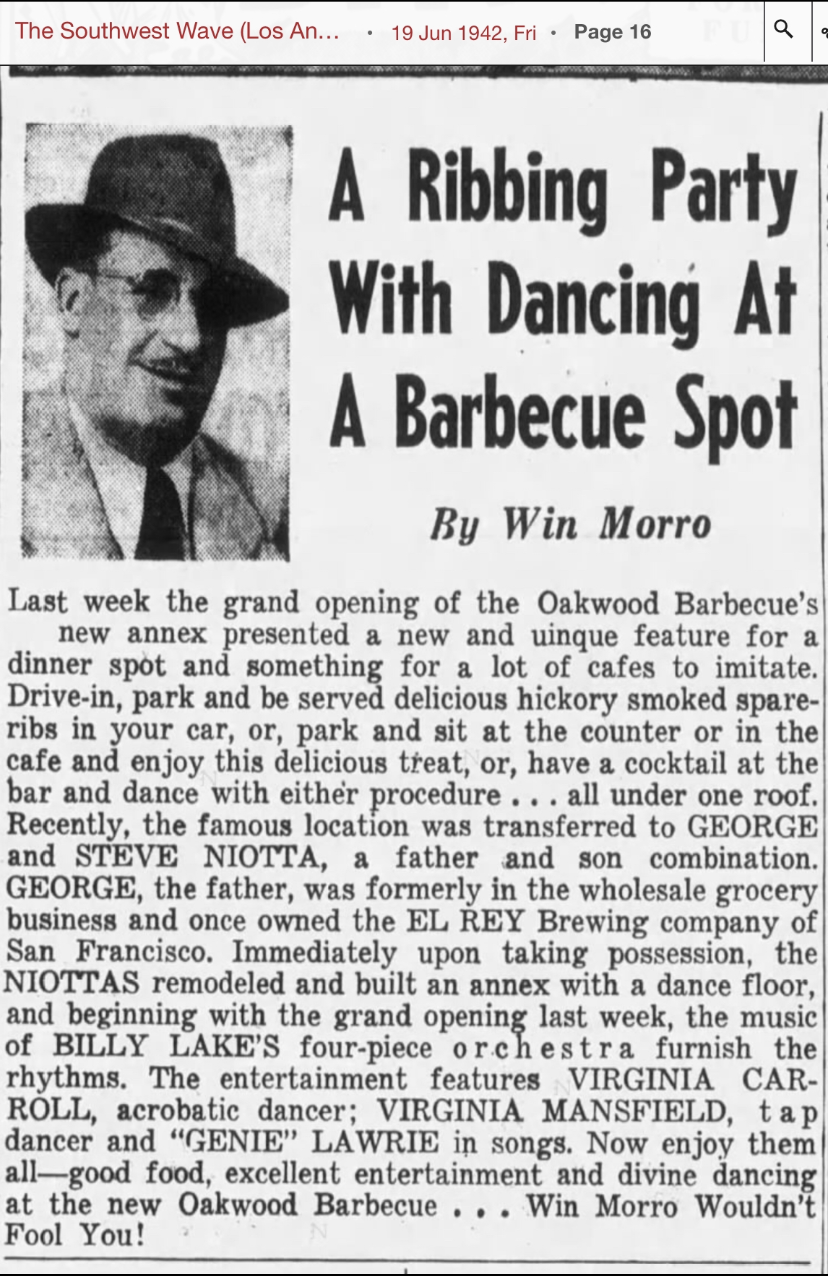
One of Big George’s Entrepreneurial moves after el rey!

Big George Niotta with his daughters Marion and Celie and son Stevie.
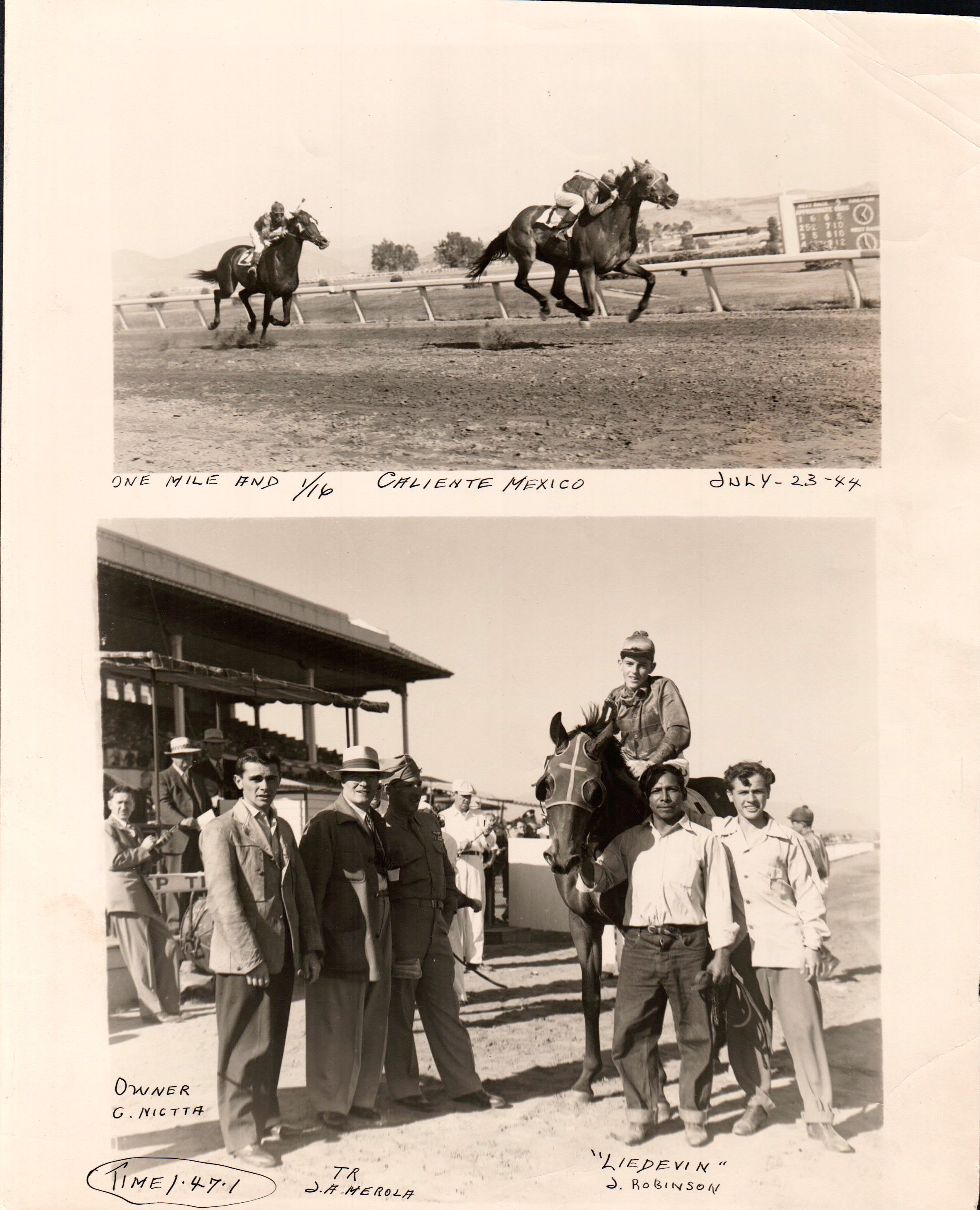
Big George and his son Stevie watching their race horse run down in Mexico.
A Few Fine El Rey Products of the Past
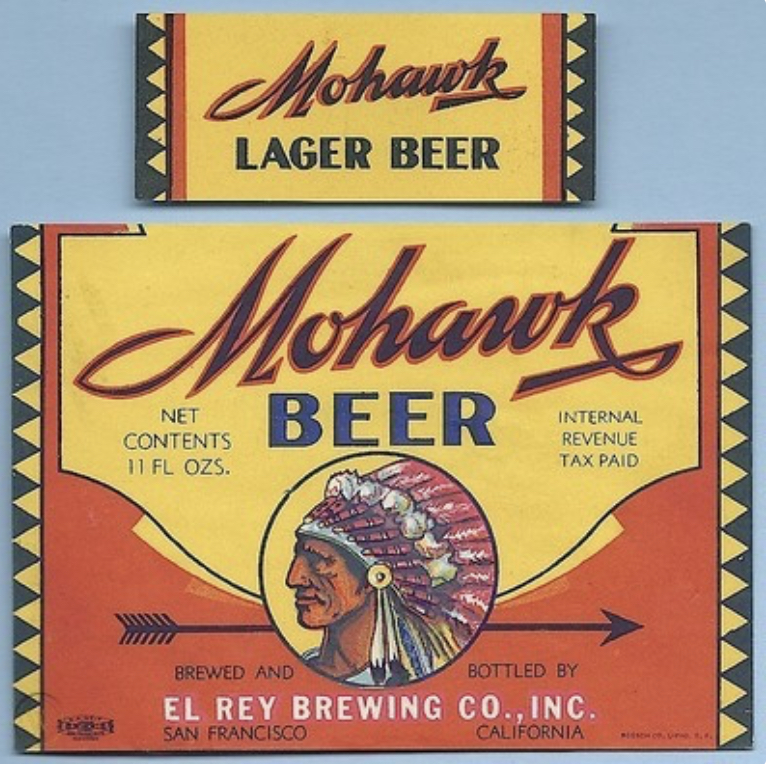
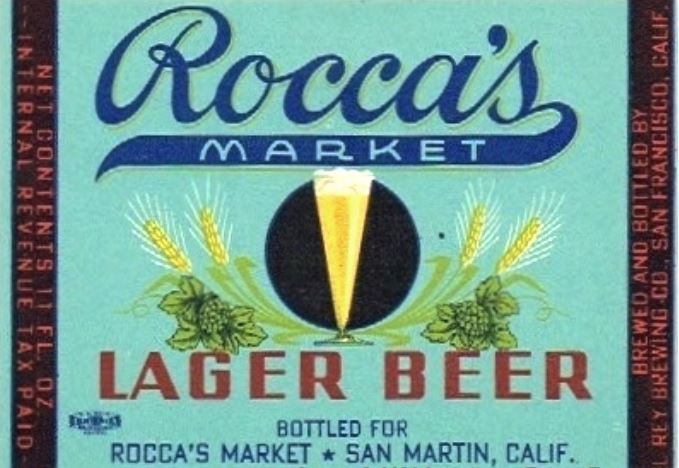
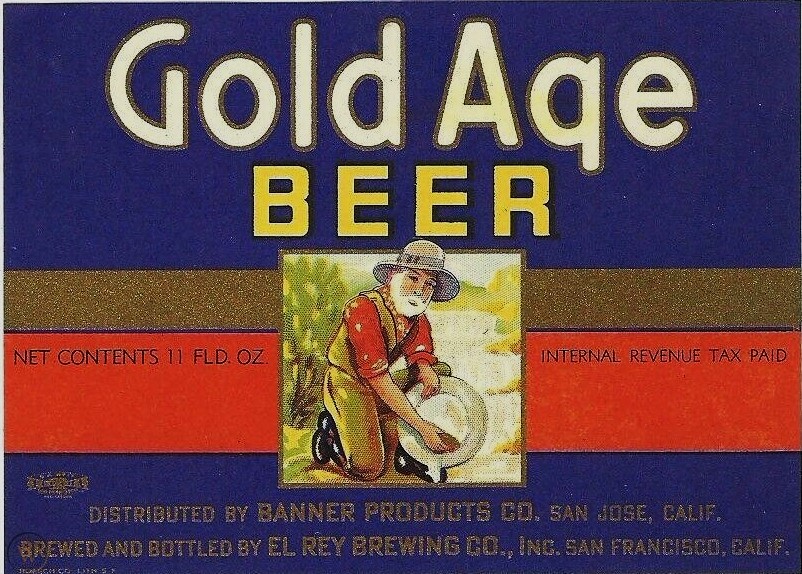
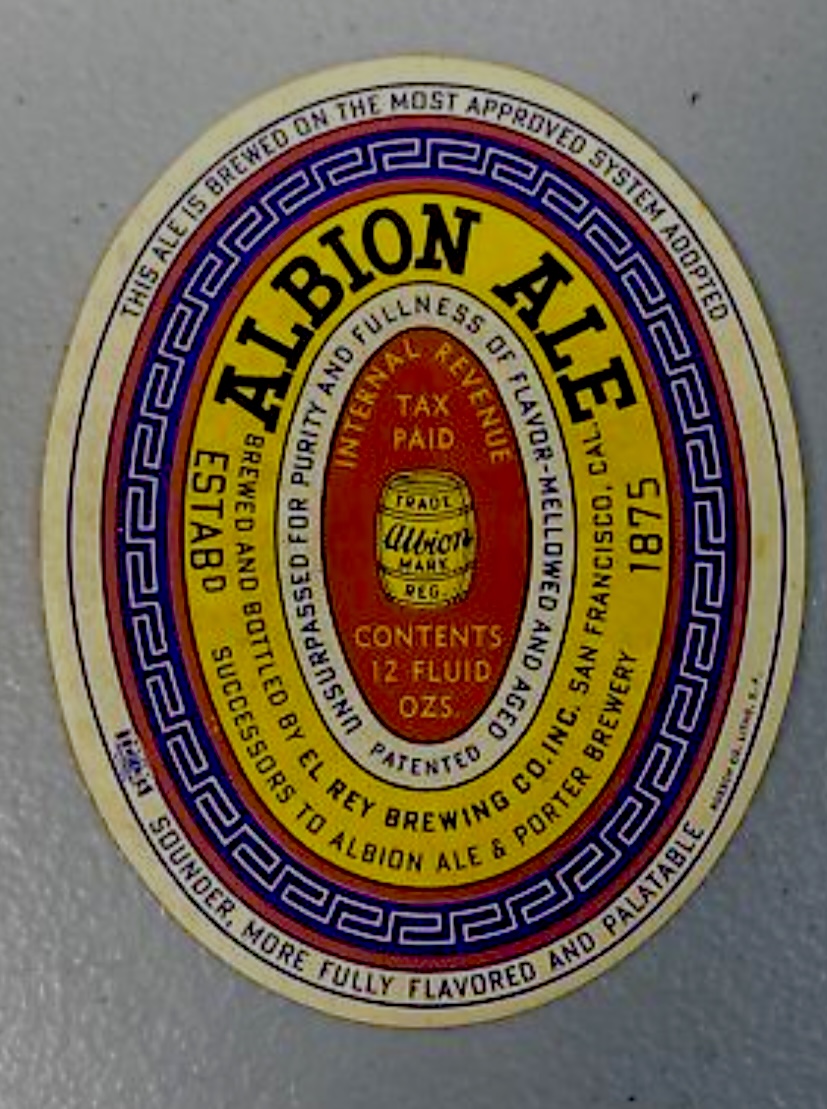
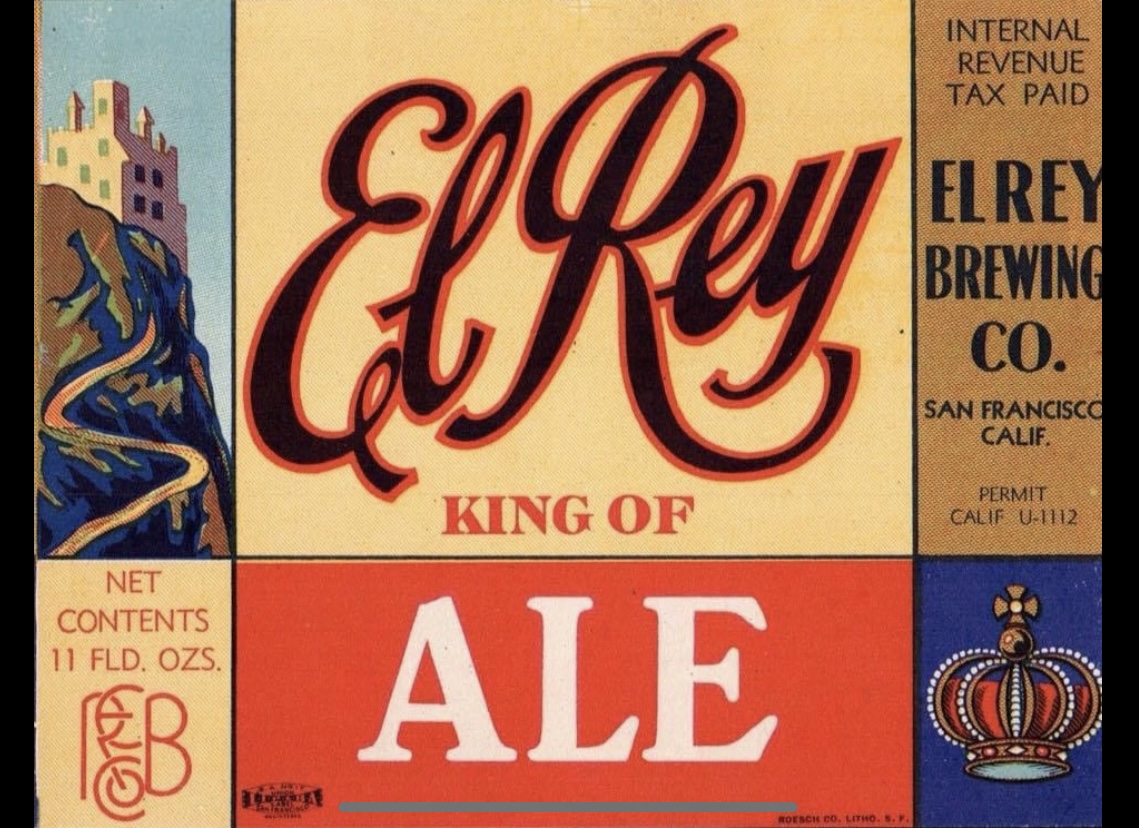
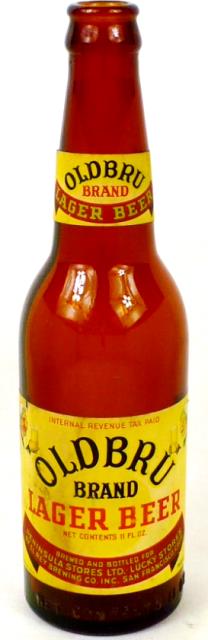
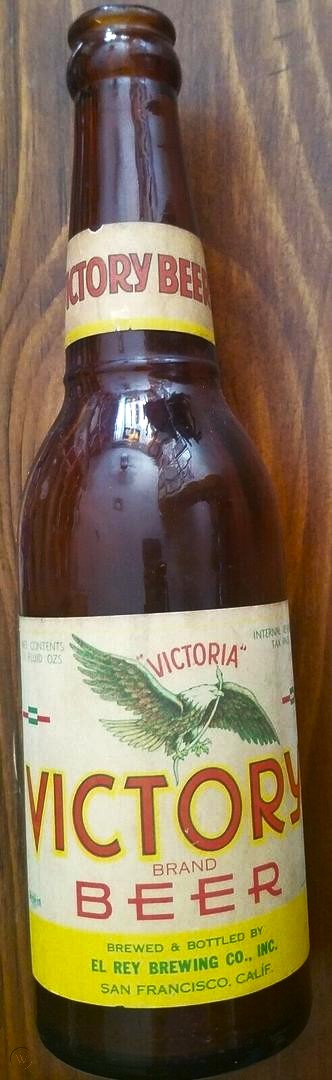
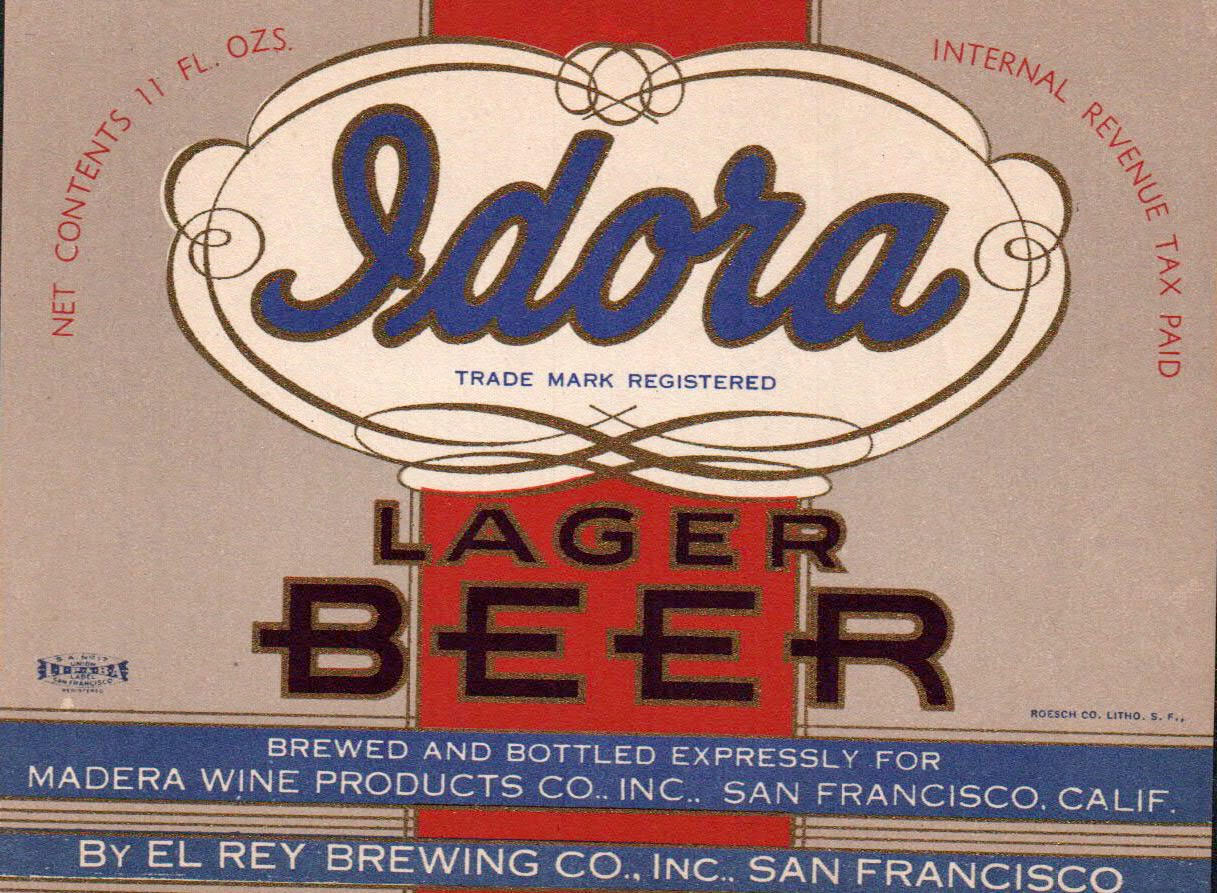
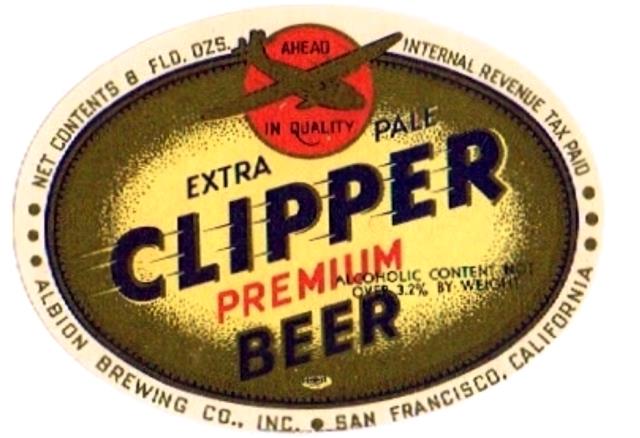
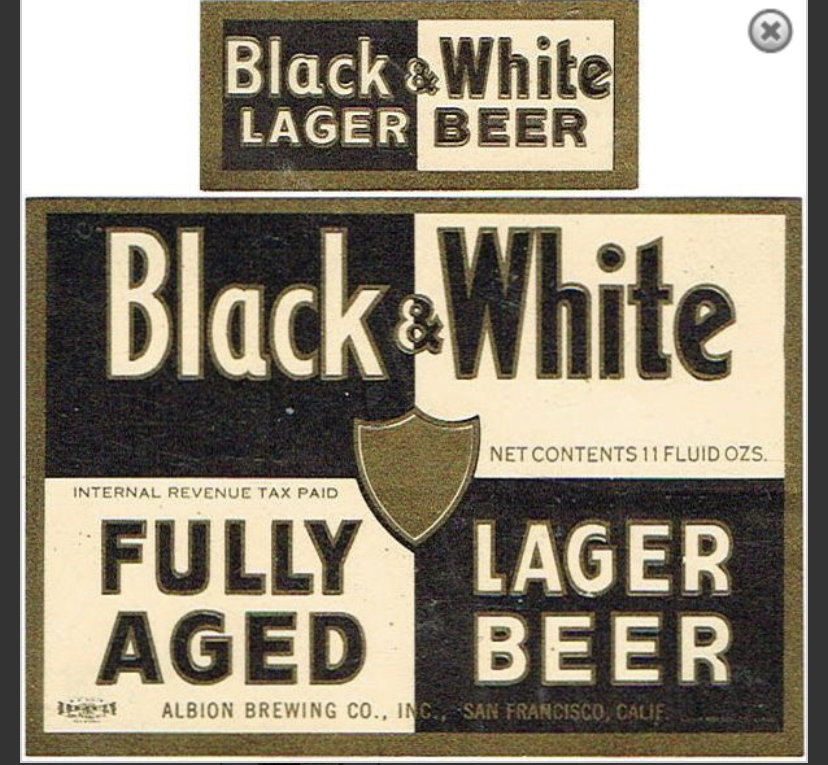
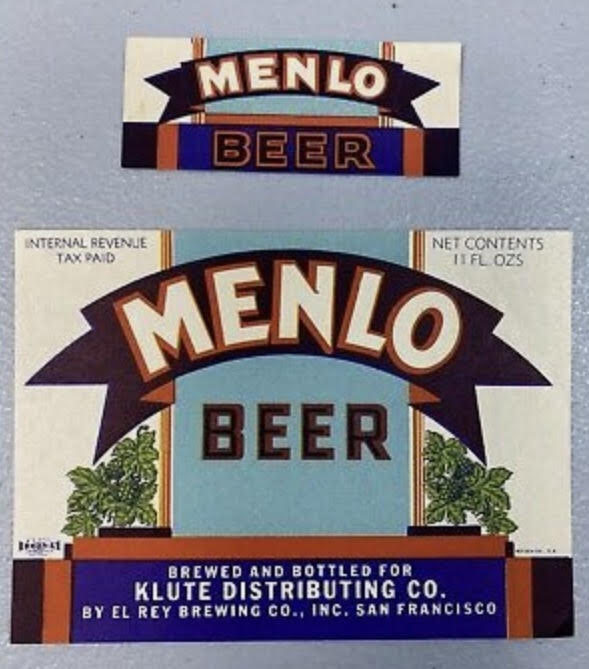
Over more than four decades and several name changes, the brewery that eventually became Big George’s El Rey, brewed and bottled quite an assortment. In addition to a steam and ale version of their signature El Rey Beer, they also put out varieties of Albion, Steinbrau, Mohawk, plus Tornberg’s Old German Lager, Gold Age, and of course, Eagle. The plant brewed and bottled under private label as well, producing signature products for independent stores like Rocca’s Market and future giant Lucky Food Stores (now Albertsons). For the chain of Leidig’s stores they brewed Dutch Mill and Old Stock Ale.






 J. Michael Niotta PhD | Official Site